When your teen is overwhelmed, it can feel like you’re guessing what helps.
Mental Health and Co-Occurring Conditions in Autistic Teens:
A calm, practical guide for parents and caregivers who want clearer answers, better support options, and less second-guessing.
This ebook is for you if:
You suspect anxiety, depression, or burnout is impacting your autistic teen
You feel unsure what is “autism” and what might be an additional mental health need
Your teen looks “fine” at school but crashes at home
You want to support your teen without pushing, shaming, or escalating conflict
You want practical language, not confusing clinical jargon
You want to make therapy and support choices that fit your teen’s brain and nervous system
After reading, you will feel more equipped to:
Name what you are seeing with more confidence
Respond with support that matches the moment
Reduce power struggles and shame cycles
Advocate more clearly for the right kind of help
Build a calmer plan that supports your teen’s mental health over time
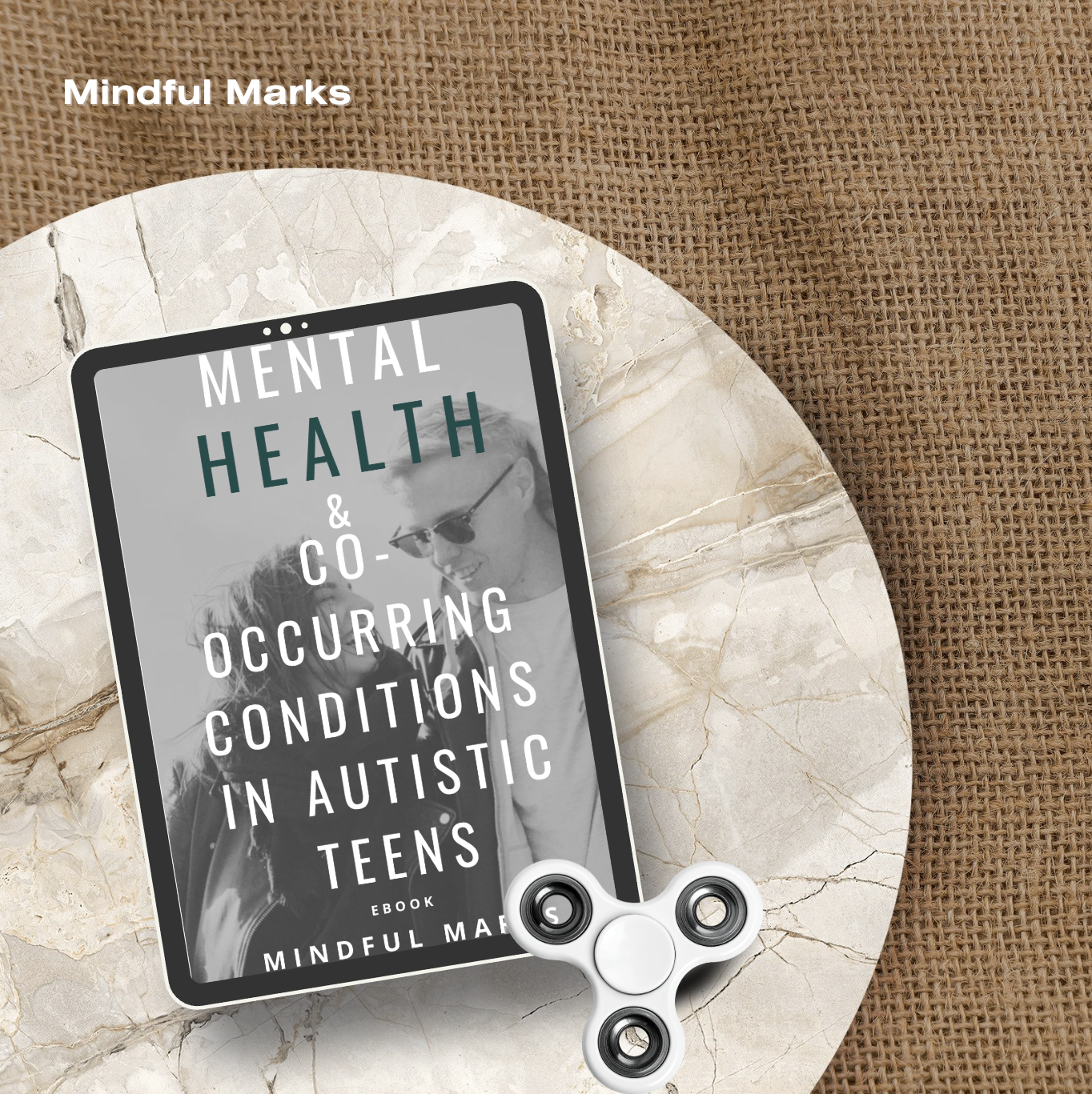
Support Tools for Autistic Teens Made Simple
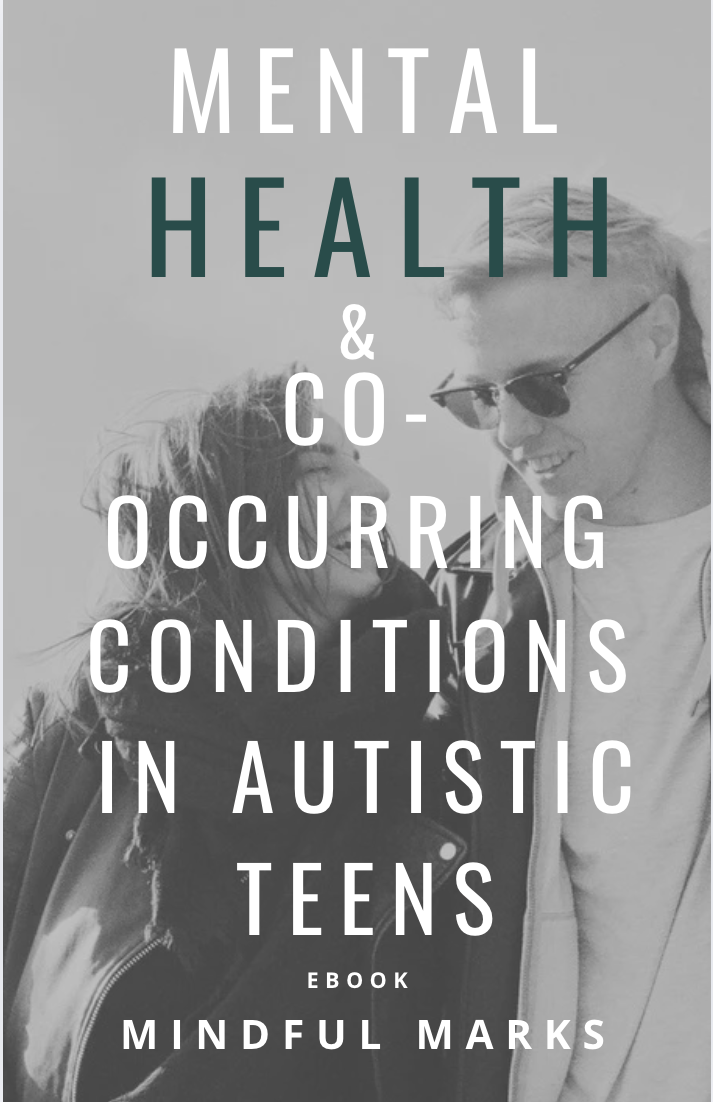
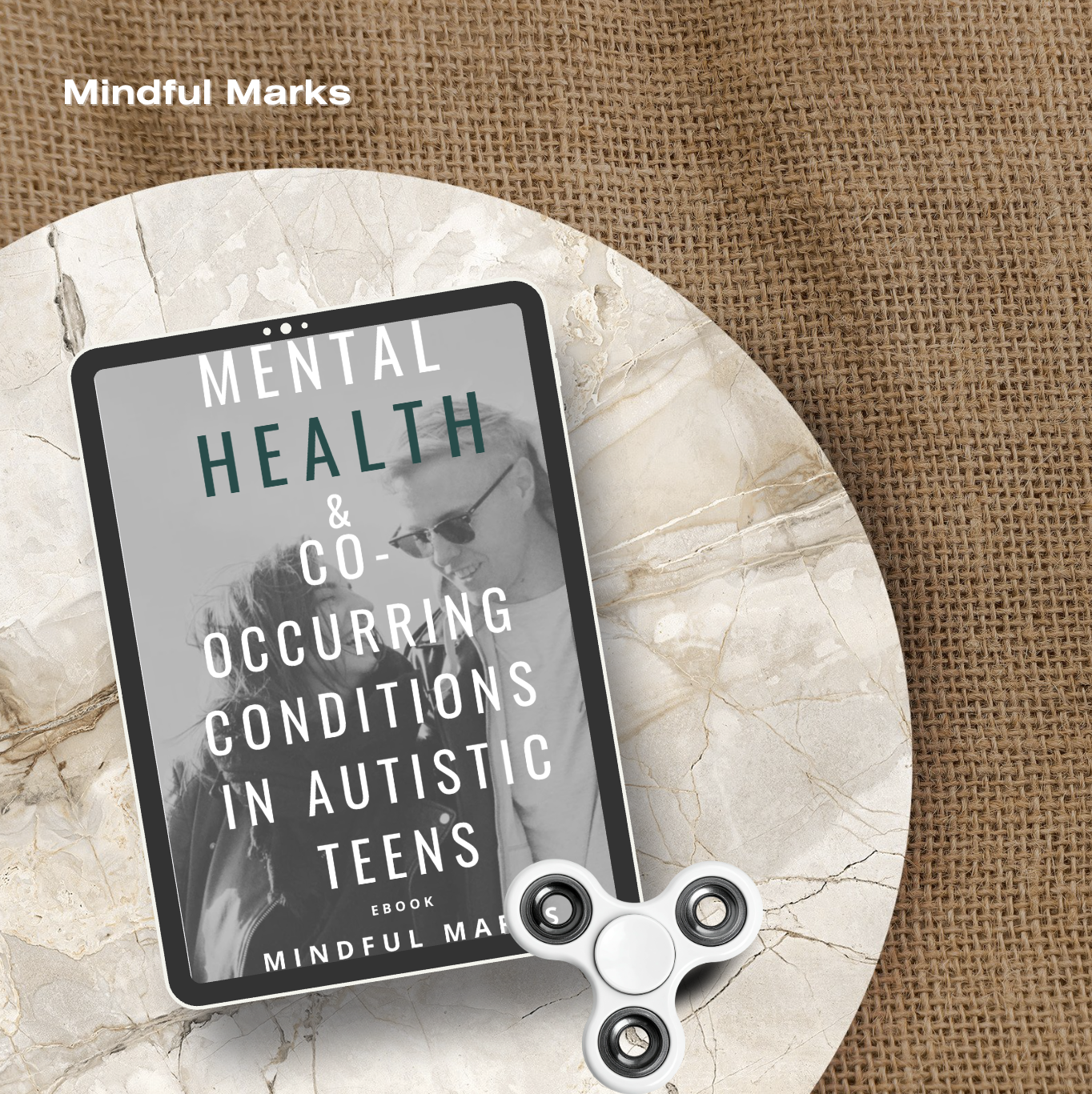
Mental Health & Co-Occurring Conditions in Autistic Teens is a compassionate, easy-to-understand guide designed to help autistic teens and their families recognize, understand, and manage mental health challenges that often occur alongside autism. This downloadable PDF explains common co-occurring conditions such as anxiety, depression, OCD, ADHD, sleep challenges, and sensory processing differences in clear, supportive language that reduces fear and confusion.
Inside, teens and caregivers will learn how these conditions may show up differently in autistic adolescents, why early recognition matters, and what supportive strategies actually help. The guide includes coping tools, emotional awareness activities, daily regulation strategies, and guidance on when to seek professional support, making it a valuable resource for both home and school use.
Perfect for parents, caregivers, therapists, and educators, this PDF empowers families to move away from shame and toward understanding, confidence, and self-advocacy.
Best for:
✔ Autistic teens (ages 10–18)
✔ Parents & caregivers
✔ Therapists, educators, and support professionals
Topics include:
• Anxiety, depression, OCD & ADHD
• Emotional awareness & regulation
• Sensory support strategies
• When & how to ask for help
SEO keywords: mental health in autistic teens, co-occurring conditions autism, autism anxiety depression teens, autistic teen emotional support
Download, print, and use right away


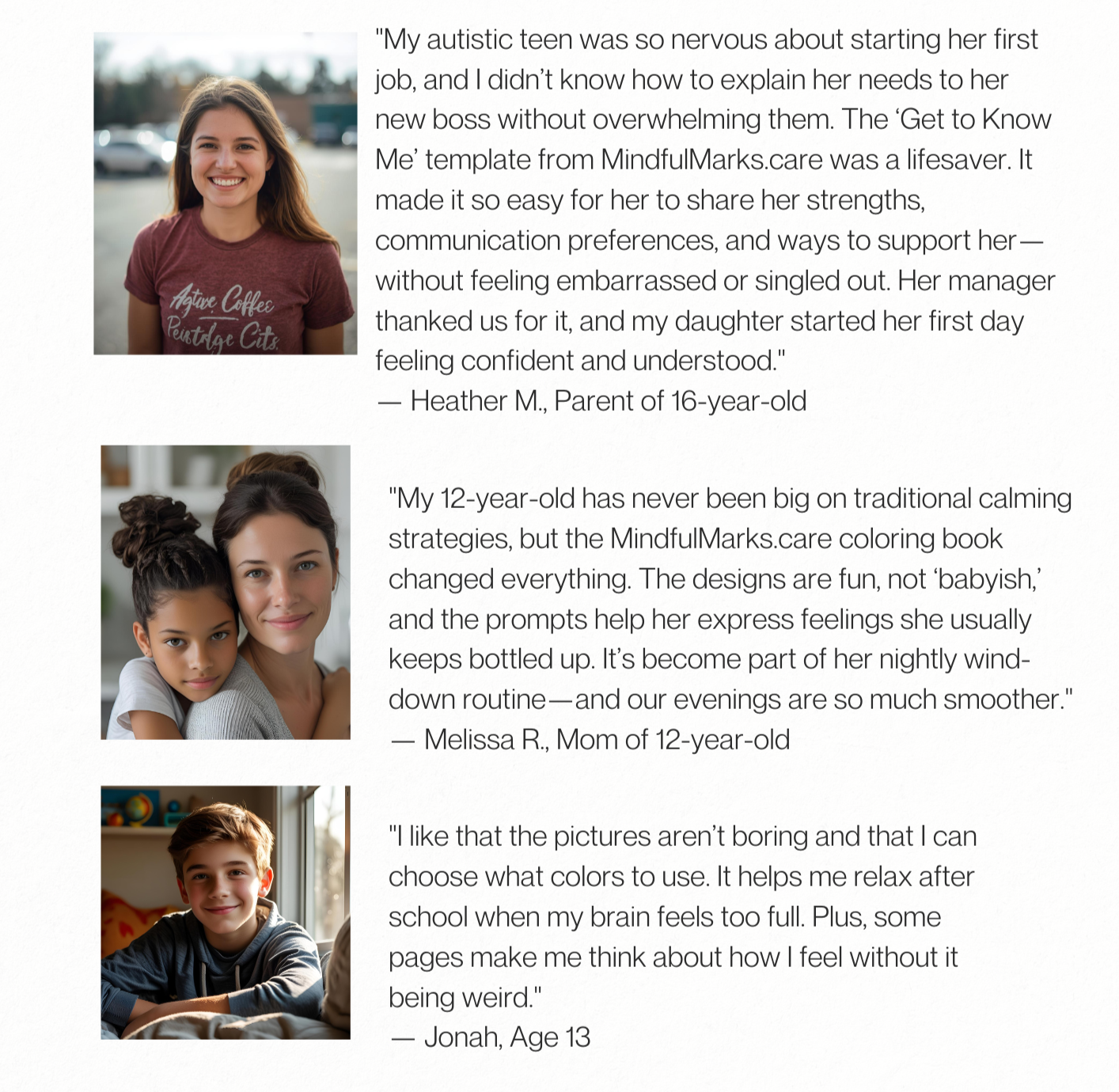
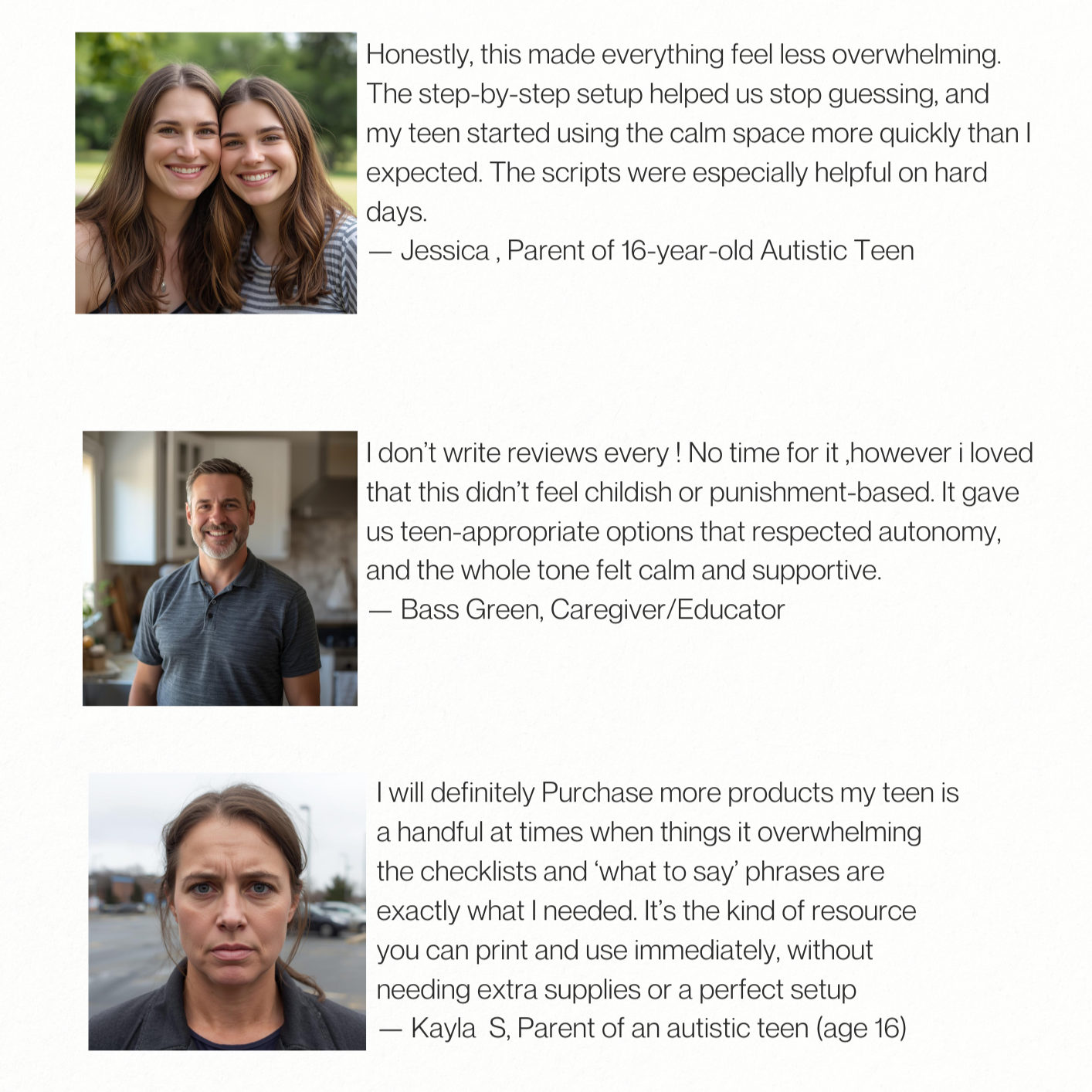
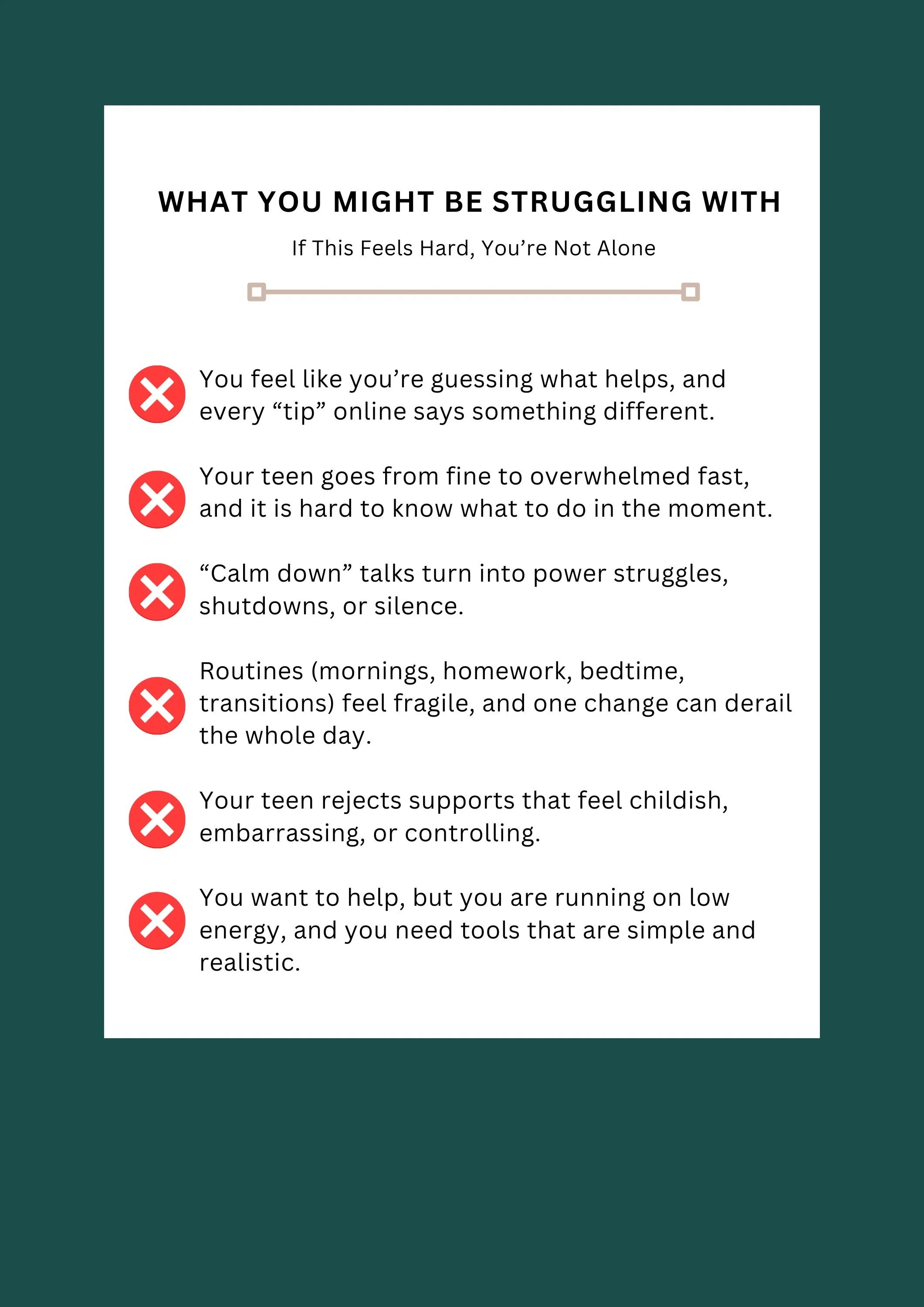
If you’re here, you’re probably trying to support an autistic teen through moments that feel big, fast, and hard to predict. And if it feels like nothing works consistently, you’re not alone. Autism support is not about forcing calm or “fixing” behavior. It’s about creating the right environment, tools, and language so your teen can feel safer—and so you have a plan that doesn’t rely on pressure.
If any of this sounds familiar, you’re not doing anything wrong. Many families are navigating the same patterns. Our digital products are designed to turn “guessing” into clear, gentle options—so you have a plan that supports regulation, communication, and autonomy in ways that feel respectful and usable.
You do not have to figure this out alone, and you do not have to do it perfectly. Our products are here to give you clear, respectful support you can use in real moments—so your teen feels safer, and you feel more confident responding with calm and dignity. You’re welcome to explore our digital downloads and select the tools that best suit your teen.
Real Outcomes
What Our Digital Tools Help You Do
Our products are designed to help your family move from guessing to clear support—so daily life feels more doable, and your teen’s needs are supported with dignity.
With the right supports in place, many families notice:
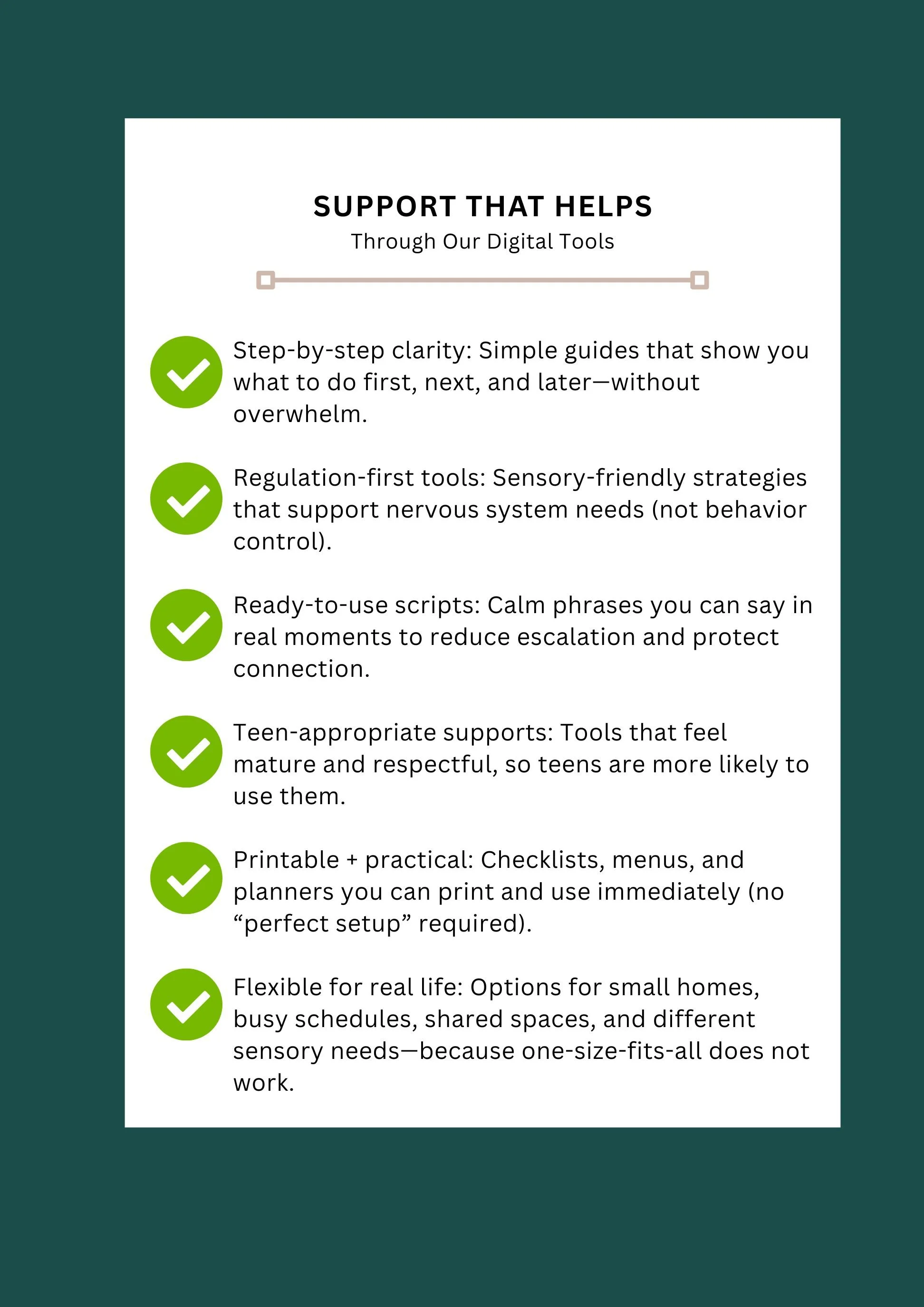
Less escalation in hard moments (because there’s a plan)
Faster recovery after overwhelm (because the environment supports regulation)
Fewer power struggles (because choices replace pressure)
More consistency with routines (because steps are externalized and predictable)
More confidence for caregivers (because you know what to do next)
More autonomy for teens (because tools are teen-appropriate and respectful)
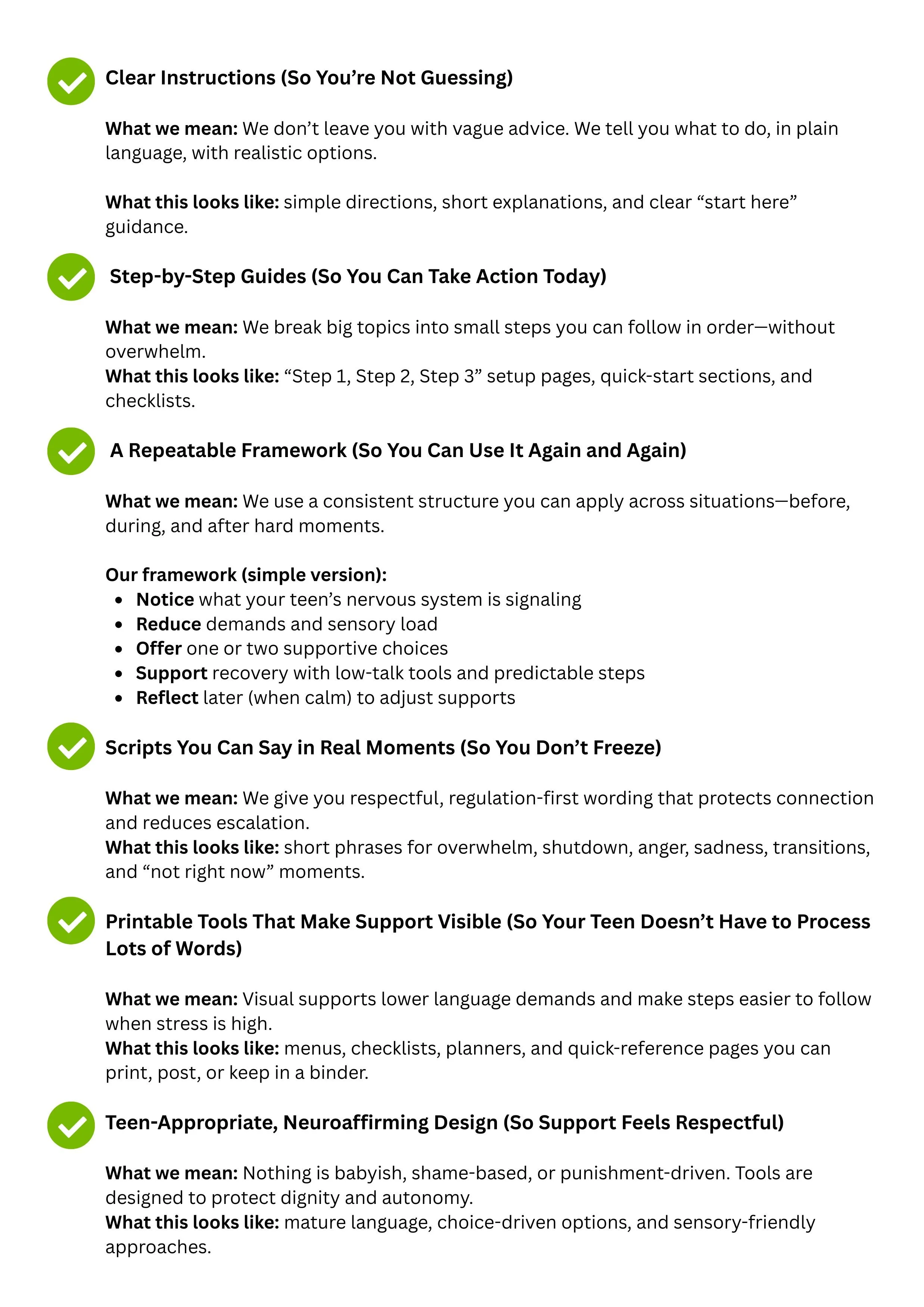
These tools are not about controlling your teen. They are about creating safety, predictability, and supportive options—so regulation becomes more possible over time.
Mental Health & Co-Occurring Conditions in Autistic Teens is a compassionate, easy-to-understand guide designed to help autistic teens and their families recognize, understand, and manage mental health challenges that often occur alongside autism. This downloadable PDF explains common co-occurring conditions such as anxiety, depression, OCD, ADHD, sleep challenges, and sensory processing differences in clear, supportive language that reduces fear and confusion.
Inside, teens and caregivers will learn how these conditions may show up differently in autistic adolescents, why early recognition matters, and what supportive strategies actually help. The guide includes coping tools, emotional awareness activities, daily regulation strategies, and guidance on when to seek professional support, making it a valuable resource for both home and school use.
Perfect for parents, caregivers, therapists, and educators, this PDF empowers families to move away from shame and toward understanding, confidence, and self-advocacy.
Best for:
✔ Autistic teens (ages 10–18)
✔ Parents & caregivers
✔ Therapists, educators, and support professionals
Topics include:
• Anxiety, depression, OCD & ADHD
• Emotional awareness & regulation
• Sensory support strategies
• When & how to ask for help
SEO keywords: mental health in autistic teens, co-occurring conditions autism, autism anxiety depression teens, autistic teen emotional support
What “co-occurring conditions” means in simple, clear language
How anxiety, sensory overload, shutdown, and meltdown can look similar, and how support differs
How burnout can show up in autistic teens and what recovery support can look like
How masking can hide distress and how to check in without pressure
The role of sleep, routines, and nervous system strain in mental health
How to notice patterns without turning your home into a data project
When it may be time to seek additional support, and what to ask for
How to think about therapy and supports without a one-size-fits-all approach
What makes this different?
A neuroaffirming guide, not a fear-based one
This ebook is written to reduce confusion and increase clarity. It does not treat autistic traits as problems to eliminate. It focuses on support that protects dignity, reduces shame, and helps families respond to real needs with practical strategies.
Key points:
Calm, supportive tone
Clear explanations with real-life examples
Practical scripts and check-in language for parents
Emphasis on safety, consent, and nervous-system support
Designed for quick reference when you are tired or overwhelmed
What’s included:
A step-by-step breakdown of common co-occurring mental health needs in autistic teens
Quick “what this might look like” checklists to reduce second-guessing
Support-first response guides for hard moments
Parent check-in scripts that protect the connection
A simple pattern-tracking method (lightweight and realistic)
Guidance for choosing support that fits your teen’s needs and values
You can read it start-to-finish or use it as a calm reference guide.
Many autistic teens live with more than autism alone. Anxiety, depression, OCD traits, ADHD, trauma responses, sleep disruption, and burnout can overlap and change how a teen feels, functions, and copes. This ebook helps you understand what you may be seeing, what it can mean, and what supportive next steps can look like without fear-based messaging or shame.
What you will learn:
Download, Print, and use right away

A Note From Mindful Marks
If you’re here, there’s a good chance you care deeply about an autistic teen—and you’re trying to support them through a stage of life that can feel intense, complicated, and misunderstood.
Mindful Marks was created because autistic teens often get stuck in the in-between: too old for “little kid” supports, but not always given tools that truly respect their nervous system, autonomy, and dignity. We believe support should feel calm, clear, and non-shaming—not controlling, fear-based, or overwhelming.
Our digital products are designed to help you move from guessing to gentle, practical action. You’ll find step-by-step guides, sensory-friendly tools, and ready-to-use scripts that help you support regulation, communication, and daily routines in ways that feel respectful for teens and realistic for families.
You don’t have to do this perfectly. You just need supports that fit your teen—and your real life.
Frequently Asked Questions
-
Our resources are made for autistic teens (and the caregivers, educators, and helpers who support them). Most tools are designed with ages 10–18 in mind and written in a calm, respectful tone.
-
After checkout, you will receive an email with a download link so you can save the PDF to your device and use it anytime.
-
Yes. Our PDFs are designed to be printable. You can print the pages you need and keep them in a binder, on the fridge, or in a calm corner folder.
-
No. Most tools are designed to work with what you already have. When supplies are suggested, we include flexible, budget-friendly options.
-
No. Mindful Marks resources are regulation-first and neuroaffirming. We focus on support, sensory needs, communication, and autonomy, not control or shame.
-
No. Our content is educational and supportive, but it is not medical advice and does not replace individualized care from qualified professionals.
Mental Health & Co-Occurring Conditions in Autistic Teens is a compassionate, easy-to-understand guide designed to help autistic teens and their families recognize, understand, and manage mental health challenges that often occur alongside autism. This downloadable PDF explains common co-occurring conditions such as anxiety, depression, OCD, ADHD, sleep challenges, and sensory processing differences in clear, supportive language that reduces fear and confusion.
Inside, teens and caregivers will learn how these conditions may show up differently in autistic adolescents, why early recognition matters, and what supportive strategies actually help. The guide includes coping tools, emotional awareness activities, daily regulation strategies, and guidance on when to seek professional support, making it a valuable resource for both home and school use.
Perfect for parents, caregivers, therapists, and educators, this PDF empowers families to move away from shame and toward understanding, confidence, and self-advocacy.
Best for:
✔ Autistic teens (ages 10–18)
✔ Parents & caregivers
✔ Therapists, educators, and support professionals
Topics include:
• Anxiety, depression, OCD & ADHD
• Emotional awareness & regulation
• Sensory support strategies
• When & how to ask for help
SEO keywords: mental health in autistic teens, co-occurring conditions autism, autism anxiety depression teens, autistic teen emotional support
Ready for calmer clarity?
If you have been carrying questions alone, this ebook is a supportive next step. It is designed to help you move from worry and confusion to practical understanding and steady action.
Mental health support is not one-size-fits-all, and neither is autism. Your teen’s needs can be real even when they are hard to label. This guide was created to help you think clearly, respond calmly, and choose support that fits your teen’s brain, body, and season of life.
Instant PDF download • Printable tools + scripts included • Built for real life