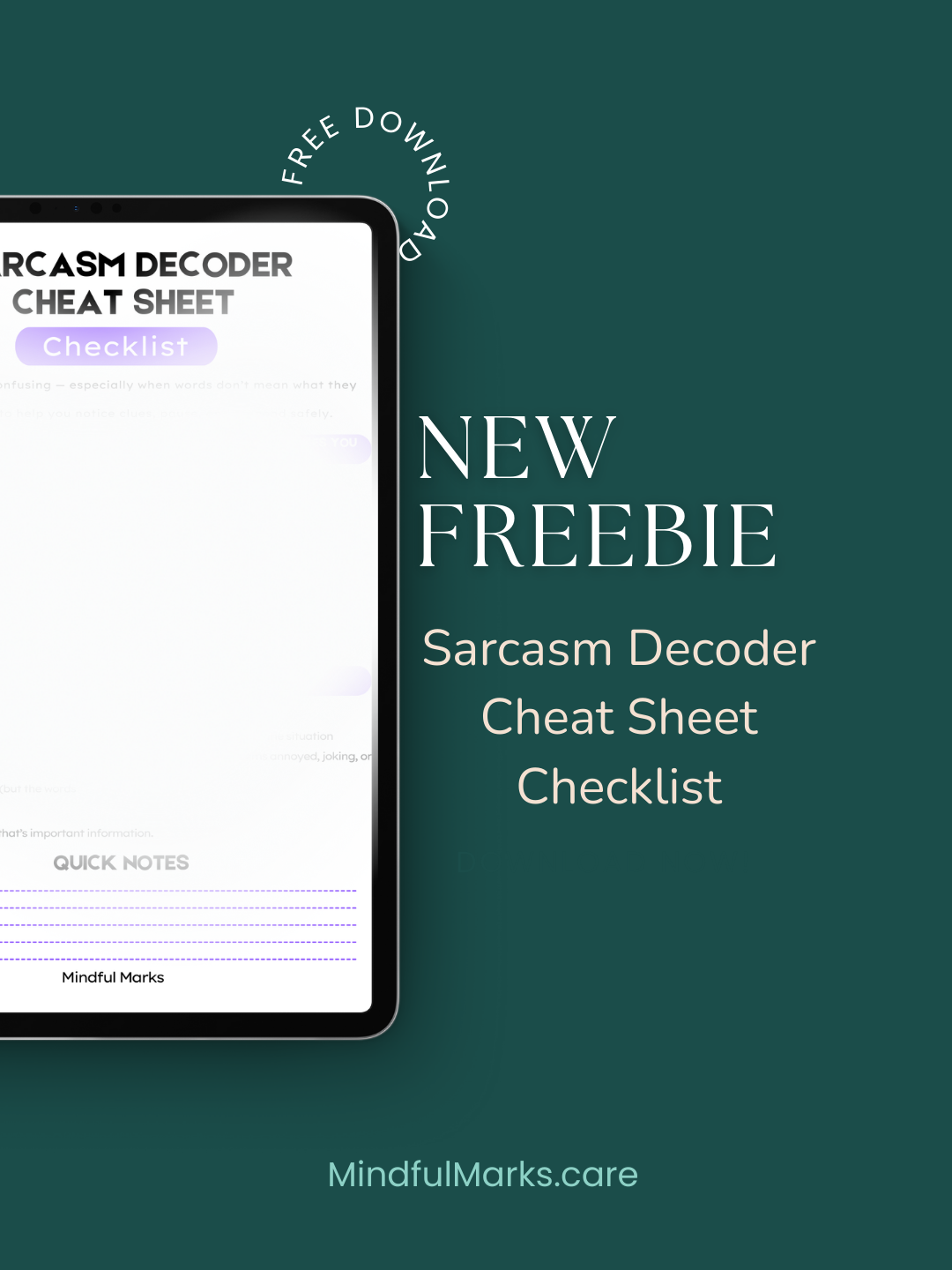
Sarcasm is confusing. This cheat sheet makes it clearer
Download this free Sarcasm Decoder Cheat Sheet to learn common sarcasm clues, examples, and safe scripts for asking for clarity.
Sarcasm can feel stressful because the words do not always match what someone means. If your teen takes language literally, that is not “wrong.” It is a valid way of processing communication.
This cheat sheet helps teens notice sarcasm clues, pause, and choose a response that protects their energy and keeps things clear.
What this cheat sheet helps with (benefits)
This freebie supports teens (and parents) by helping them:
Recognize common signs that sarcasm might be happening (tone, context, facial expression)
Understand that sarcasm is often about tone and context, not just words
Compare literal vs. sarcastic meanings with quick examples
Respond safely when unsure, without pressure to “mask” or guess
Use respectful scripts to ask for clearer language
What’s inside (deliverables)
Inside the Sarcasm Decoder Cheat Sheet, you’ll get:
A simple definition of sarcasm in teen-friendly language
A checklist of sarcasm clues (tone, mismatch, reactions, context)
Common sarcastic phrases teens might hear
Quick examples (literal vs. sarcastic)
Scripts like:
“Was that serious or sarcastic?”
“I’m not sure how you meant that.”
“I take things literally. Can you clarify?”
A gentle section on what to do if sarcasm feels hurtful