
A Breakdown of Autism Therapies: ABA, Speech, OT, and More—What Do They Actually Do?
When a child is diagnosed with autism, one of the first questions parents often ask is: “What therapies are available, and which ones are right for my child?” Because autism is a spectrum, every child’s strengths and challenges look different, and so do their therapy needs. Understanding the purpose and goals of different therapies can help families make informed decisions.
Here’s a breakdown of some of the most common autism therapies—what they do, how they help, and what to consider when exploring them.
Applied Behavior Analysis (ABA)

Photo of: an autistic teen getting ABA Services
What It Is:
Applied Behavior Analysis (ABA) is one of the most widely used therapies for autistic children. It focuses on teaching skills and reducing behaviors that may interfere with learning or daily life. ABA uses positive reinforcement to encourage desired behaviors.
How It Helps:
Builds communication, social, and daily living skills
Breaks down tasks into smaller, manageable steps
Reinforces progress with rewards (praise, toys, tokens, etc.)
Considerations:
While ABA is supported by a large body of research, some autistic self-advocates have raised concerns about its intensity or methods when not done thoughtfully. Many modern ABA providers now use play-based, flexible, and child-centered approaches.
Speech and Language Therapy
What It Is:
Speech therapy supports communication skills, including verbal language, nonverbal communication, and social use of language (pragmatics).
How It Helps:
Develops speech clarity, vocabulary, and sentence building
Strengthens understanding of language (receptive skills)
Teaches alternative communication methods such as AAC (augmentative and alternative communication) devices, sign language, or picture exchange systems
Considerations:
Even if a child is nonverbal, speech therapy can be highly effective by focusing on communication in all forms, not just spoken words.
Occupational Therapy (OT)
What It Is:
Occupational therapy helps autistic children build independence in daily life skills and improve how they process sensory information.
How It Helps:
Improves fine motor skills (e.g., writing, buttoning clothes, using utensils)
Builds self-care skills such as dressing, bathing, or eating independently
Provides sensory integration strategies to manage sensitivities (like loud noises or clothing textures)
Considerations:
OT sessions are often fun and engaging, using play, movement, and calming activities tailored to the child’s sensory profile.
Physical Therapy (PT)
What It Is:
Physical therapy focuses on gross motor skills and body movement.
How It Helps:
Improves balance, coordination, and posture
Builds strength and flexibility
Supports participation in sports, playground activities, and everyday movement tasks
Considerations:
PT can be especially helpful for children with motor delays or low muscle tone, which are sometimes seen in autism.
Social Skills Training

Photo of: Autistic teen getting Social Skills Training
What It Is:
Social skills training helps children learn to interact with peers and adults in meaningful, age-appropriate ways.
How It Helps:
Teaches conversation skills, turn-taking, and reading social cues
Builds confidence in group settings
Encourages friendship-building and teamwork
Considerations:
Social skills groups often provide a safe, structured environment where autistic children can practice with peers.
Cognitive Behavioral Therapy (CBT)
What It Is:
CBT is a form of talk therapy that helps children recognize and reframe unhelpful thought patterns.
How It Helps:
Reduces anxiety, which is common among autistic children
Supports emotional regulation and coping skills
Helps with problem-solving and flexible thinking
Considerations:
CBT is most effective with children who are verbal and can reflect on their feelings, though modified approaches exist for younger or less verbal children.
Developmental and Play-Based Therapies
What They Are:
These therapies focus on building relationships and learning through play. Examples include DIR/Floortime and Relationship Development Intervention (RDI).
How They Help:
Strengthen emotional connections between the child and caregivers
Encourage communication through play, gestures, and shared attention
Promote problem-solving and creativity
Considerations:
Many families appreciate these approaches because they emphasize the child’s interests and natural interactions.
Parent Training and Family Support
What It Is:
Parent training programs help caregivers learn strategies to support their child’s development at home.
How It Helps:
Provides consistency between therapy sessions and home life
Gives parents tools to manage challenging behaviors
Strengthens family understanding of autism and advocacy skills
Considerations:
Family involvement is often one of the strongest predictors of progress in therapy.
Choosing the Right Therapies
There is no “one-size-fits-all” approach. Some children may benefit from a combination of ABA, speech, and OT, while others may find more growth through play-based or social skills programs. Factors to consider include:
Your child’s strengths, needs, and learning style
Your family’s goals and values
Availability of qualified providers in your area
Insurance coverage or funding options
The most important factor is ensuring therapy feels supportive, respectful, and tailored to your child—not a rigid checklist of skills.
Resources for Families
Autism Speaks – Treatment Options: https://www.autismspeaks.org/autism-treatment-options
CDC – Autism Spectrum Disorder (ASD) Treatment: https://www.cdc.gov/ncbddd/autism/treatment.html
American Speech-Language-Hearing Association (ASHA):https://www.asha.org/public/speech/disorders/Autism/
American Occupational Therapy Association (AOTA): https://www.aota.org/practice/autism
Autistic Self Advocacy Network (ASAN): https://autisticadvocacy.org – for autistic-led perspectives on therapies
Key Takeaway: Autism therapies can open doors to communication, independence, and self-confidence—but the right combination will depend on your child’s unique profile. Staying informed and involved as a parent is the best way to ensure your child’s therapies truly support their growth.
Parenting an autistic teen can raise questions about communication, emotions, and independence—all at once. Understanding how these pieces connect can make everyday moments feel more manageable.
👉 Continue reading:
“The Parents’ Guide to Understanding Autistic Teens: Communication, Emotional Regulation, and Independence”— a practical, compassionate resource designed to help parents support their teen with clarity and confidence.
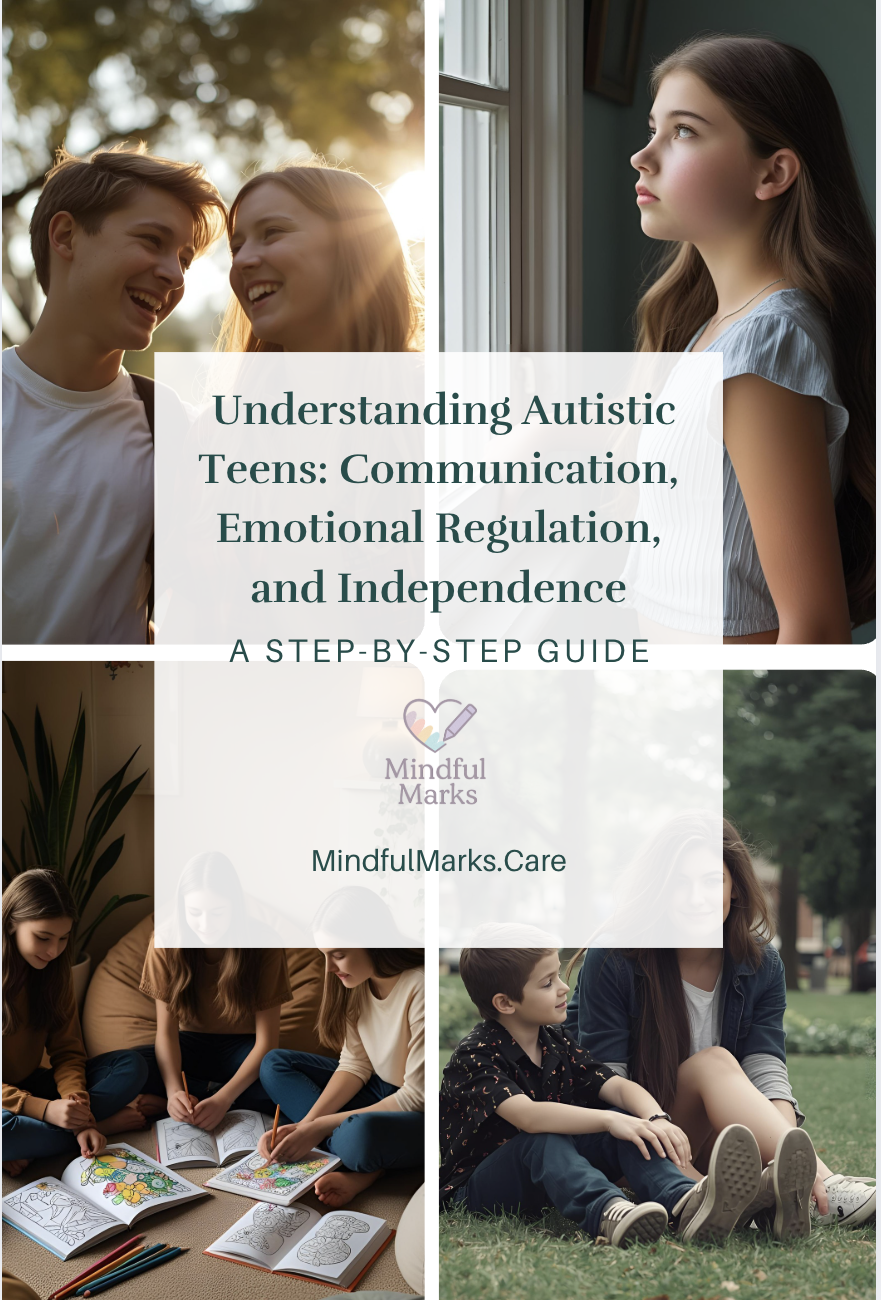
Infographic of: The Parents’ Guide to Understanding Autistic Teens: Communication, Emotional Regulation, and Independence