
For Autistic Teens: Transition Planning, Executive Functioning Support, and Mental Health Care
Growing into the teen years brings big changes—new responsibilities, higher expectations, and questions about the future. For autistic teens, these changes can feel exciting and overwhelming at the same time. The good news is that you don’t have to figure everything out at once. Transition planning, executive functioning support, and mental health care work best when they start early, move at a manageable pace, and focus on your strengths.
This guide is written for autistic teens and the adults who support them. It’s practical, realistic, and designed to help you take the next steps—one small win at a time.
What Is Transition Planning (and Why It Matters)?
Transition planning is simply thinking ahead about life after high school. That might include:
College or trade school
A job or career path
Independent or supported living
Managing daily responsibilities
Advocating for your needs
Transition planning is not about rushing you into adulthood. It’s about preparing at your pace so fewer things feel scary later.
For Teens: How to Start Transition Planning
You don’t need a 10-year plan. Start with questions like:
What am I good at?
What drains me?
What environments help me feel calm?
What kind of support do I need to do my best?
Write or record your answers—there’s no right or wrong.
For Parents: How to Support Without Overwhelming
Start conversations early, but keep them short
Focus on strengths before challenges
Revisit plans often—interests change
Avoid comparing your teen to peers
Tip: Transition planning works best when teens feel heard, not pressured.
Need More Support with Executive Function?
If your teen is struggling with planning, starting tasks, or following through, our Executive Function Support Packgives you step-by-step tools to help—without power struggles or shame.
Inside, you'll find:
10-minute reset routines for morning and after-school transitions
Visual supports teens will actually use
Parent and teen scripts for reducing overwhelm
The Homework Bridge Plan to make assignments manageable
Micro-steps method for breaking big tasks into tiny steps

Executive Functioning: The Skills That Make Life Run Smoother
Executive functioning skills help with:
Planning and organizing
Starting tasks
Managing time
Remembering steps
Regulating emotions
Many autistic teens struggle here—not because they’re lazy or unmotivated, but because their brains process information differently.
For Teens: Tools That Actually Help
Try experimenting with:
Visual planners instead of long to-do lists
Timers to make starting easier
Checklists broken into tiny steps
Body doubling (working near someone else)
Routine anchors (same order, same time each day)
If something doesn’t work, that doesn’t mean you failed—it means the tool wasn’t right for you.
For Parents: Support Executive Skills Without Power Struggles
Replace “Just do it” with “What’s the first step?”
Offer choices instead of commands
Model planning out loud (“First I’ll…, then I’ll…”)
Celebrate effort, not just completion
Important: Executive functioning develops over time. Progress may look slow—but it’s still progress.
Need More Support with Executive Function?
If your teen is struggling with planning, starting tasks, or following through, our Executive Function Support Pack gives you step-by-step tools to help—without power struggles or shame.
Inside, you'll find:
10-minute reset routines for morning and after-school transitions
Visual supports teens will actually use
Parent and teen scripts for reducing overwhelm
The Homework Bridge Plan to make assignments manageable
Micro-steps method for breaking big tasks into tiny steps
Grab this quick-reference printable with the strategies you just learned—perfect for keeping on hand when you need a reminder
Mental Health Care Is Not Optional—It’s Essential
Autistic teens experience higher rates of anxiety, depression, burnout, and emotional exhaustion. Masking, sensory overload, social pressure, and unmet support needs all add up.
Mental health care is not about “fixing” autism—it’s about supporting well-being.
For Teens: Signs You Might Need Extra Support
You might benefit from mental health support if you notice:
Constant exhaustion or shutdowns
Big emotional swings
Loss of interest in things you enjoy
Feeling misunderstood or alone
Increased meltdowns or withdrawal
Reaching out for help is a strength, not a weakness.
For Parents: How to Support Emotional Well-Being
Validate feelings before problem-solving
Watch for burnout, not just behavior
Seek autism-affirming therapists when possible
Normalize therapy and mental health check-ins
Tip: A therapist who understands autism can help teens learn coping skills without forcing masking.
Putting It All Together: Small Steps That Make a Big Difference
You don’t need to tackle everything at once. Try starting with just one area:
One Step Teens Can Try This Month
Choose one tool to test (planner, timer, checklist)
Write down three strengths
Schedule one mental health check-in (with yourself or a trusted adult)
One Step Parents Can Try This Month
Have a short, pressure-free future talk
Reduce expectations during burnout periods
Ask: “What support would help right now?”

A Final Word for Teens (and Parents)
Growing up autistic doesn’t mean you’re behind—it means your path may look different. With the right supports in place, autistic teens can build futures that honor their needs, protect their mental health, and highlight their strengths.
You are not too late.
You are not broken.
And you don’t have to do this alone.
Progress doesn't come from doing more—it comes from having the right support.
Get Our Executive Function Tips Guide (Free)
If you're finding these strategies helpful, you might want the complete guide to reference whenever you need it.
Helpful Resources
Autistic Self Advocacy Network (ASAN) – Autistic-led advocacy, education, and resources for self-advocacy and transition planning
Autism Society – Family support, transition planning resources, and community connections
National Center on Secondary Education and Transition (NCSET) – Evidence-based practices for transition planning
CHADD (Children and Adults with ADHD) – Executive function tools, strategies, and support for co-occurring ADHD
988 Suicide & Crisis Lifeline – Free, confidential 24/7 crisis support (call or text 988)
Crisis Text Line – Text HOME to 741741 for free, 24/7 crisis support
The Trevor Project – LGBTQ+ crisis support and mental health resources (1-866-488-7386)
Psychology Today Therapist Finder – Search for autism-affirming, neurodiversity-informed therapists in your area
JAN (Job Accommodation Network) – Free guidance on workplace accommodations and employment rights
Understood.org – Executive function strategies, learning differences support, and parent resources
Want the complete system? Our Complete Toolkits step-by-step chapters, bonus printable tools, scripts for every situation, and deep-dive strategies for long-term success.
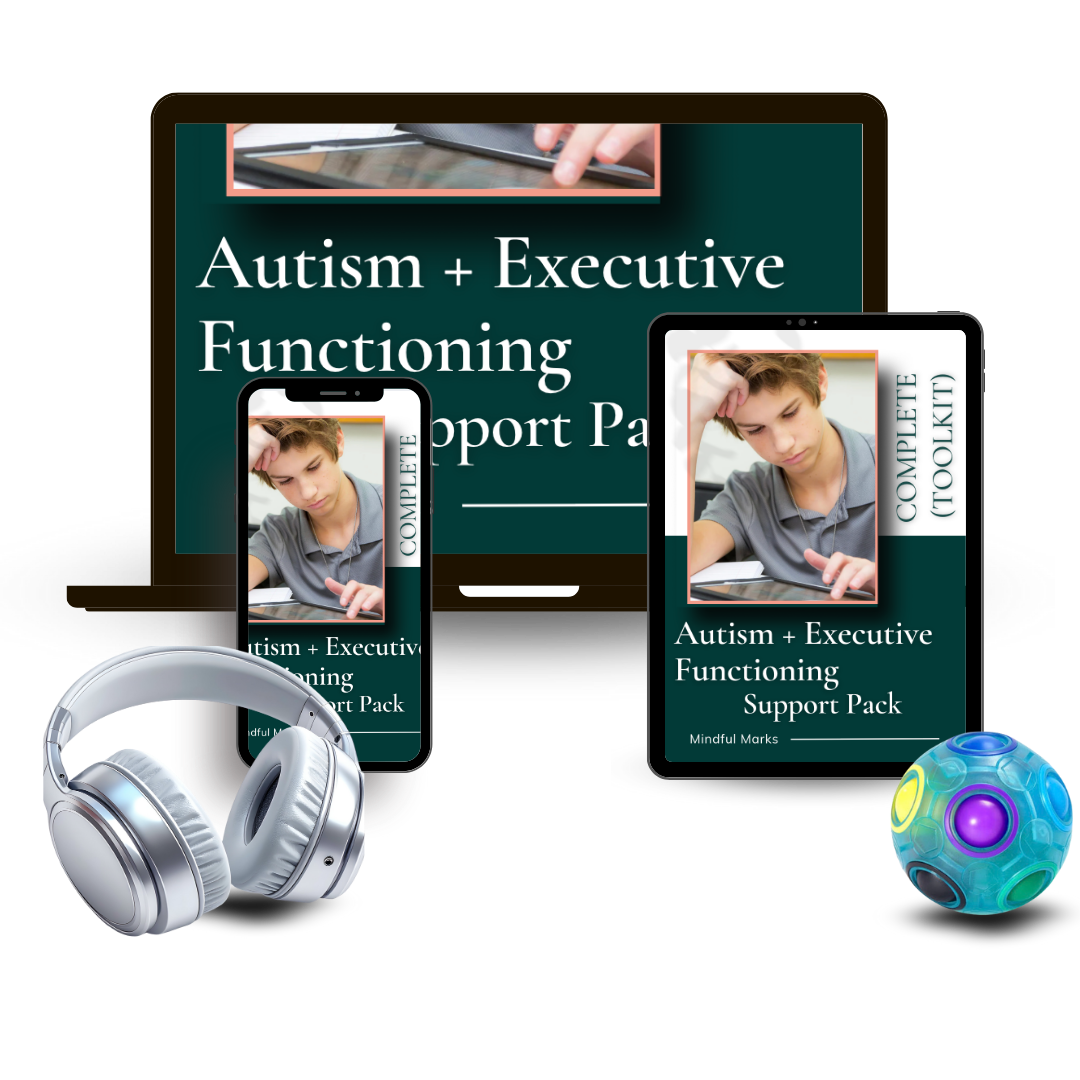
Executive functioning doesn't have to feel impossible.
Starting tasks. Remembering steps. Switching from one thing to another. Managing time. These everyday moments can feel overwhelming for autistic teens and adults—not because of lack of effort, but because executive function skills need the right supports.
This toolkit gives you those supports.
Who this is for:
Autistic teens and adults who want real EF tools that reduce overwhelm
Caregivers and educators supporting autistic people with executive function challenges
Anyone looking for practical, shame-free supports (not "fixes")
What you'll get:
8 complete support sections with fillable templates, visual cards, scripts, and step-by-step guides:
✅ Task Initiation Tools – Start with 2 minutes, micro-steps, body doubling plans, and "when I can't start" troubleshooting
✅ Planning + Breakdown Templates – Turn big tasks into small steps with simple worksheets and daily/weekly planners
✅ Working Memory Supports – Brain dumps, packing lists, "before I leave" checklists, and supportive reminder scripts
✅ Transitions Support – Visual cue cards, 5-minute warnings, and decompression routines for switching activities
✅ Time Supports – Timers, time estimates, buffer planning, and "running late" scripts
✅ Regulation + Overwhelm Tools – Overwhelm scales, prevention plans, break menus, sensory toolkits, and calm space setup
✅ Communication Scripts – For caregivers, teens/adults, school/work, and boundaries (consent-based, low-pressure language)
✅ School + Work Support Packs – Homework plans, project planners, study guides, group work roles, meeting prep, and email templates
Plus: Print-and-cut visual cards, routine strips, break cards, checklists, and more.
What makes this toolkit different:
💛 Neuroaffirming – Built on support, not compliance
💛 Low-pressure – "Tiny" progress counts
💛 Realistic – Designed for variable capacity days
💛 Flexible – Personalize, simplify, or skip anything that doesn't fit
💛 Regulation-first – If a tool adds stress, switch to a regulation tool and return later
File Details:
📄 14 PDF files included with printable templates, visual cards, scripts, and guides
🖨️ US Letter format (8.5 x 11 inches) – Print at home or at your local print shop
📏 70+ pages of tools, templates, scripts, and visual supports
How to use this toolkit:
Pick one focus (starting tasks, planning, transitions, time, memory, or regulation)
Choose 3 starter tools (1 starting tool + 1 planning tool + 1 regulation tool)
Set up one home base (binder, clipboard, folder, or device)
Use tools as real-time support (not as a "perfect system")
Success looks like:
✨ Feeling less stuck when starting tasks
✨ Having clear next steps (even tiny ones)
✨ Knowing what helps and what makes things harder
✨ More support, less conflict
✨ Building self-trust: "My brain needs support" instead of "I'm failing"
This toolkit is designed to make life easier, not stricter. If a tool increases pressure, modify it, simplify it, or skip it. Support works best when it's offered with consent and choices.