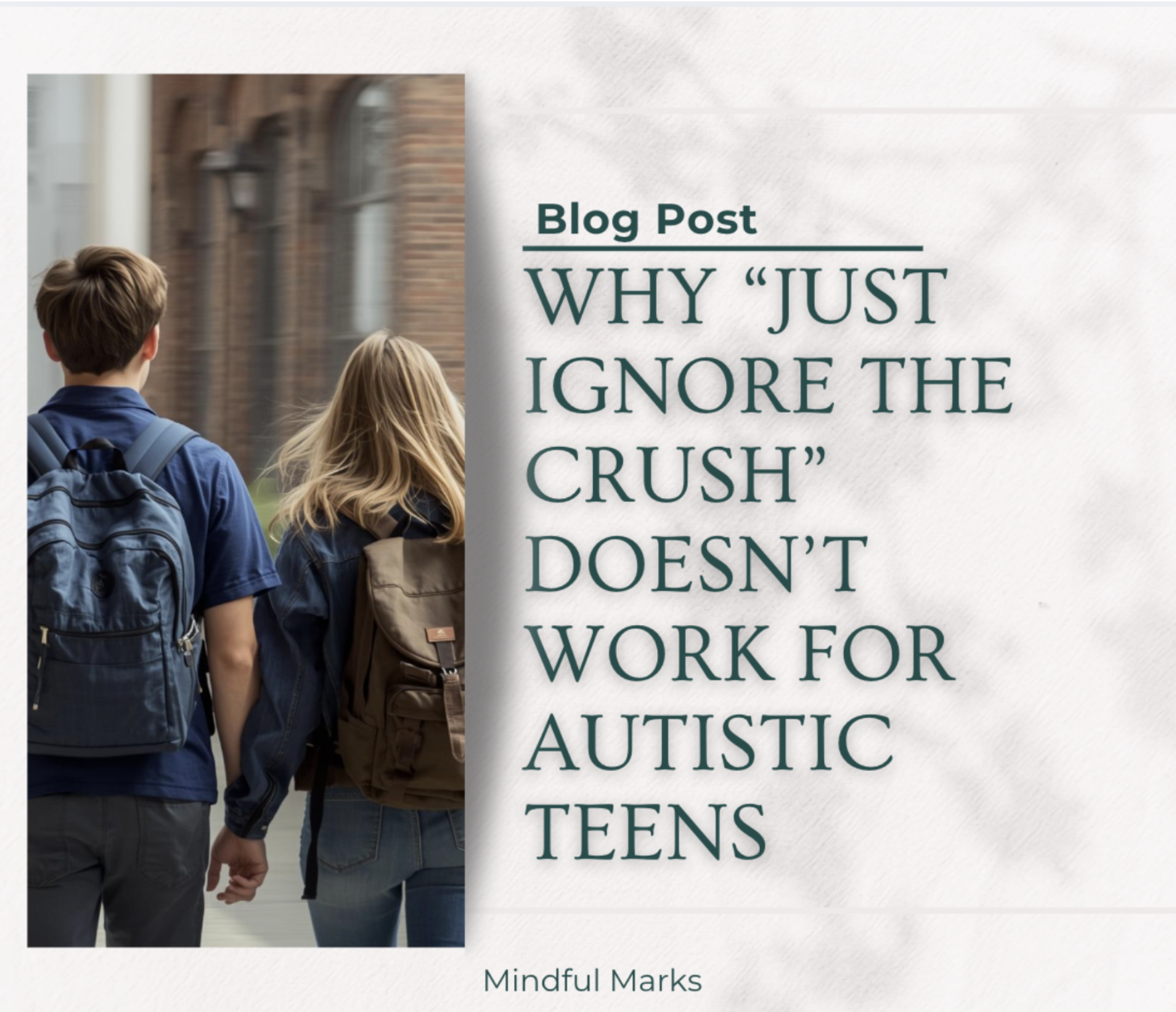
When Your Autistic Teen Has Their First Crush: What Parents Need to Know
For many parents, noticing that their autistic teen has a first crush can bring up a mix of emotions — pride, worry, confusion, and a lot of questions. You may wonder if your teen is “ready,” how to keep them safe, or how autism might shape this experience differently.
The truth is: having a crush is a normal part of development, and autistic teens experience attraction, curiosity, and emotional connection just like anyone else — often with more intensity, honesty, or vulnerability.

The truth is: having a crush is a normal part of development, and autistic teens experience attraction, curiosity, and emotional connection just like anyone else — often with more intensity, honesty, or vulnerability.
How Crushes Can Look Different for Autistic Teens
Autistic teens may express a crush in ways that don’t match typical expectations. Some common differences include:
Talking about the same person repeatedly
Wanting to be near them constantly
Misreading friendliness as romantic interest
Feeling intense emotions with little middle ground
Becoming anxious, withdrawn, or dysregulated
These behaviors aren’t “immature” or inappropriate — they reflect differences in social processing, emotional regulation, and communication.
If your teen’s first crush is bringing up big feelings (for them and for you), you do not have to figure it out on the fly. A little structure can make these conversations feel safer and calmer.
If you’d like support you can use right away, download our free Healthy Crushes & Relationships Toolkit. It includes a feelings check-in, consent + boundaries reminders, green/red flags, texting scripts, and a rejection coping plan.
Common Parent Concerns (You’re Not Alone)
Parents often worry about:
Boundaries and consent
Rejection and emotional safety
Online interactions
Being taken advantage of
Their teen misunderstanding signals
These concerns are valid. The goal isn’t to stop crushes — it’s to support your teen through them safely and compassionately.
How to Support Your Teen Through Their First Crush
1. Normalize the Experience
Let your teen know that having a crush is normal and okay. Avoid teasing or minimizing their feelings.
2. Be Clear, Not Vague
Autistic teens benefit from direct language. Explain concepts like interest, boundaries, and consent explicitly rather than assuming they’ll “pick it up.”
3. Talk About Feelings Before Rules
Start with emotional understanding:
“Crushes can feel exciting and overwhelming at the same time.”
4. Teach Boundaries Gently
Use clear examples of what is and isn’t appropriate (frequency of messages, personal space, privacy).
5. Prepare for All Outcomes
Help your teen understand that feelings may or may not be mutual — and that rejection, while painful, is survivable and temporary.

What Matters Most
Your teen doesn’t need shame, fear, or silence around relationships.
They need guidance, safety, emotional validation, and trust.
Supporting your autistic teen through their first crush isn’t about controlling their feelings — it’s about giving them tools to navigate emotions, relationships, and self-respect.