
I’m Terrified and Don’t Know If This Is Serious or Not
How Parents Can Tell the Difference Between Passing Thoughts, Shutdown Language, and a Real Crisis
As a parent of an autistic teen, few thoughts are more frightening than this one:
“What if they’re trying to tell me something… and I miss it?”
Many parents lie awake replaying conversations, texts, or moments of silence—wondering whether what they heard (or didn’t hear) was harmless stress… or a sign of something much more serious.
This fear is real. And it’s incredibly common.
Parents often struggle to tell the difference between:
Passing thoughts vs. immediate danger
Shutdown language vs. suicidal ideation
Masked distress vs. a visible mental health crisis
Let’s gently unpack why this confusion happens—and how you can respond with care without panicking or dismissing what your teen is experiencing.
Why This Is So Hard for Parents of Autistic Teens
Autistic teens often express distress differently than neurotypical teens. Emotional pain may not look dramatic. Words may be indirect—or absent altogether. Some teens shut down, mask, or intellectualize feelings instead of expressing them openly.
This creates a terrifying gray area for parents:
“Are they just overwhelmed?”
“Was that comment serious?”
“What if I overreact and damage trust?”
“What if I underreact and something terrible happens?”
That constant second-guessing is emotionally exhausting—and you are not weak for feeling it.

Photo of : Man looking emotionally exhausted after managing daily challenges of parenting an autistic teenager.
Passing Thoughts vs. Immediate Danger
Many autistic teens experience intrusive or fleeting thoughts, especially during periods of burnout, anxiety, or sensory overload.
Examples of passing thoughts might sound like:
“I don’t want to be here right now.”
“Everything feels too hard.”
“I wish I could disappear.”
These statements are still important—but they don’t always mean your teen wants to die.
🚩 Signs it may be more serious include:
Talking about death repeatedly or in detail
Asking about methods, timelines, or outcomes
Giving away belongings or saying goodbye
A sudden calm after intense distress
Loss of interest in previously meaningful things
If thoughts move from wanting the pain to stop to wanting life to stop, that’s a critical distinction.
Shutdown Language vs. Suicidal Ideation
Autistic shutdowns can look alarming—especially if you’re unfamiliar with how they function.
During a shutdown, your teen may:
Go silent or stop responding
Use very few words or flat language
Say things that sound hopeless or detached
Avoid eye contact or interaction
This does not automatically mean suicidal intent.
Shutdowns are often the nervous system’s way of protecting itself from overload—not a desire to die.
However, shutdown language can sound frightening:
“I don’t care anymore.”
“Nothing matters.”
“Just leave me alone forever.”
What helps in shutdown moments:
Fewer questions, not more
Calm presence over urgent interrogation
Statements like:
“You don’t have to talk right now. I’m here when you’re ready.”
Once your teen is regulated again, that’s the time for a deeper conversation.
When things feel overwhelming, a calm space can make a difference.
You can use our Calm Corner Checklist to build one that supports your teen’s nervous system.

photo of: Woman showing emotional fatigue from supporting an autistic teenager through daily stress and regulation needs.

Photo of: Teen struggling to concentrate on homework, showing fatigue and executive function challenges.
Masked Distress vs. Visible Crisis
One of the hardest realities for parents is this:
Some autistic teens appear “fine” on the outside while struggling intensely on the inside.
They may:
Perform well at school
Be polite and agreeable
Laugh with friends
Say “I’m okay” automatically
Masking can hide depression, anxiety, and suicidal thoughts—sometimes even from the teen themselves.
🚩 Subtle warning signs can include:
Extreme exhaustion after social or school days
Increased irritability or withdrawal at home
Physical complaints with no clear cause
Loss of joy, even in special interests
Saying they feel like a burden
Visible crisis isn’t the only kind that matters.
The Fear of Overreacting (or Not Reacting Enough)
Many parents hesitate to ask direct questions because they’re afraid of:
Putting ideas into their teen’s head
Escalating a situation unnecessarily
Breaking fragile trust
But research consistently shows this truth:
Asking about suicidal thoughts does not create them.
It often brings relief.
You can ask calmly and clearly:
“Have you had thoughts about hurting yourself?”
“Have you thought about not wanting to be alive?”
If the answer is yes, thank them for telling you. That honesty is a sign of trust, not failure.
What You Can Do Right Now
You don’t have to diagnose or solve everything in one moment.
Focus on:
Safety over certainty – It’s okay not to know everything immediately
Connection over correction – Listen before fixing
Consistency over intensity – Gentle, ongoing check-ins matter
If something feels off, trust that instinct and seek support—from a therapist, pediatrician, or crisis resource.
And remember:
Taking concerns seriously is not overreacting.
Missing warning signs is not a moral failure.
You are navigating an incredibly complex situation with love.
A Gentle Reminder for Parents
You don’t need to have perfect clarity to be a good parent.
Your willingness to notice, to ask, to stay present—even when you’re scared—matters more than getting it exactly right.
You are not alone in this fear.
And support—for both you and your teen—is allowed.
Not all challenging behavior is intentional. For many autistic teens, overwhelm shows up in ways that are easily misunderstood.
📘 Recommended next read:
“Is My Autistic Teen Being Rude—or Overwhelmed?” — helping parents recognize the signs of overload and choose responses that de-escalate rather than punish.
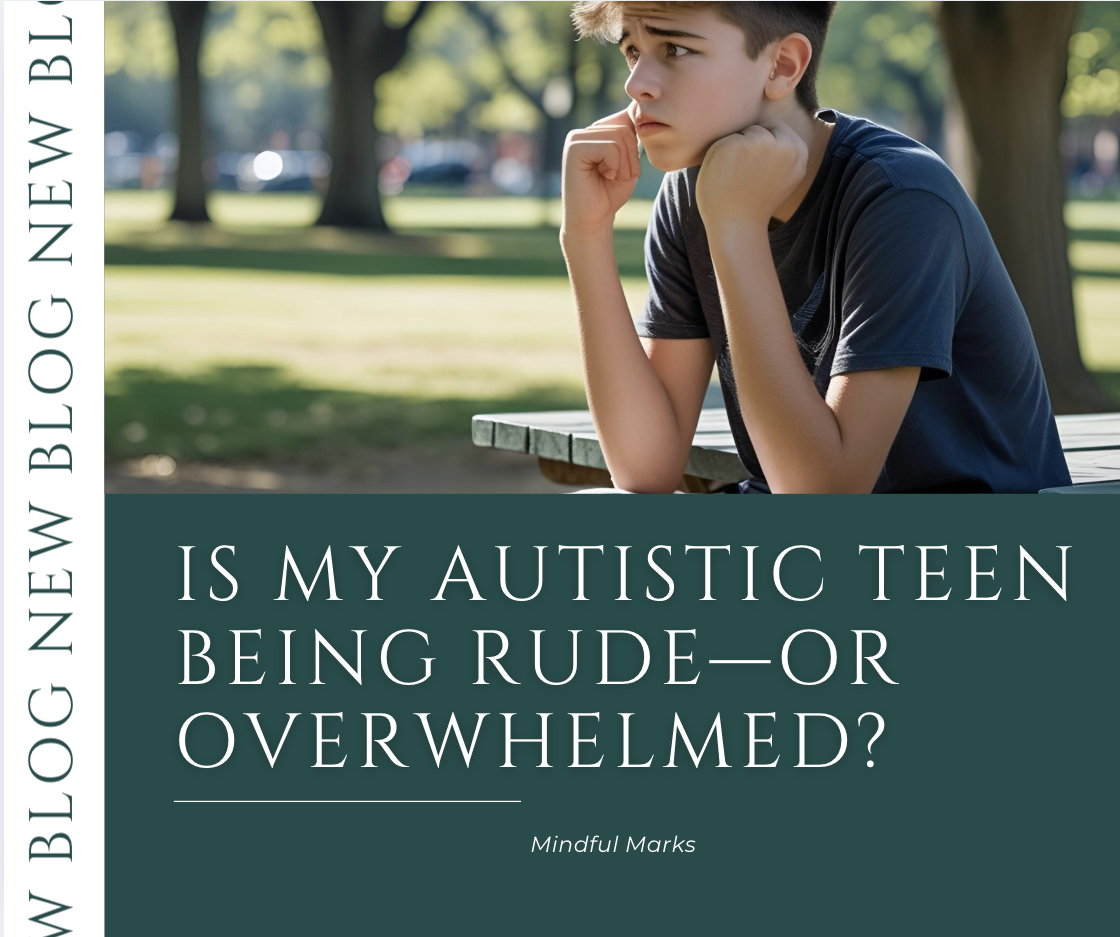
Infographic of: Teen with Autism sitting in a park, looking overwhelmed.
Is my autistic teen being rude or overwhelmed?