
Items That Help Your Autistic Teen Sleep Better at Night
If your autistic teen struggles to fall asleep, stay asleep, or feels restless at night, you’re not alone. Sleep challenges are incredibly common for autistic teens—and they’re not caused by poor parenting or a lack of routine.
Sleep differences are often rooted in:
Sensory sensitivity
Nervous system overload
Anxiety or racing thoughts
Difficulty transitioning from “day mode” to “rest mode.”
The good news? Small, intentional supports can make a big difference. Below are 6 proven, regulation-focused items that many families find helpful for improving sleep in autistic teens.
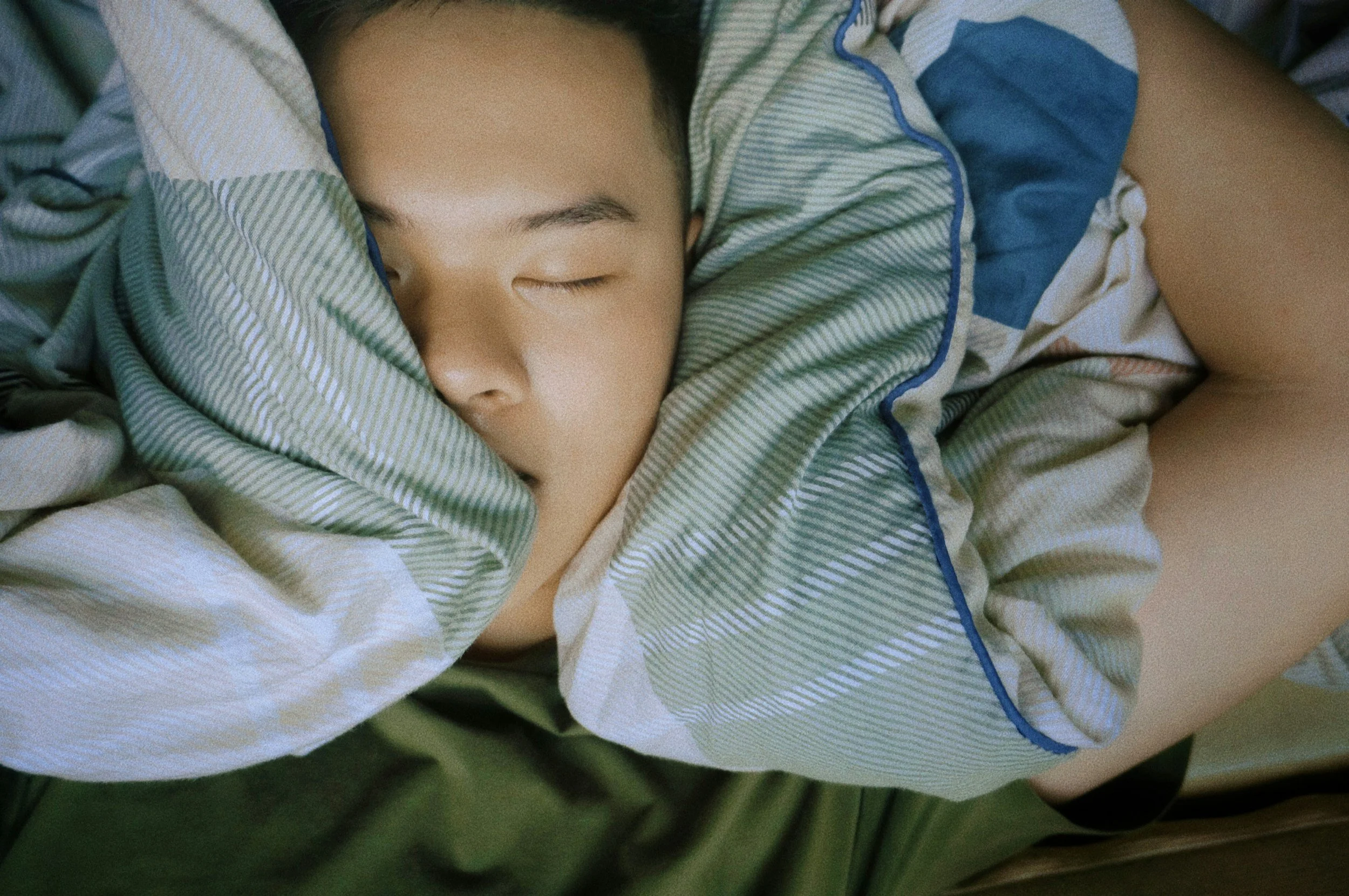
Photo of: Autistic teen trying to sleep
Why Sleep Is Different for Autistic Teens
Autistic brains often stay in a heightened state of alert longer than neurotypical brains. This means:
The body may feel tired, but the mind is still “on”
Sensory input (light, sound, fabric, temperature) can feel overwhelming
Transitions—especially from activity to rest—are harder
Nighttime regulation isn’t about forcing sleep.
It’s about helping the nervous system feel safe enough to rest.
Bedrooms can be restful or overstimulating, and it is not always obvious why. If you’d like a gentle starting point, our Sensory-Friendly Bedroom Set-Up Guide can help you notice what supports sleep, comfort, and regulation.
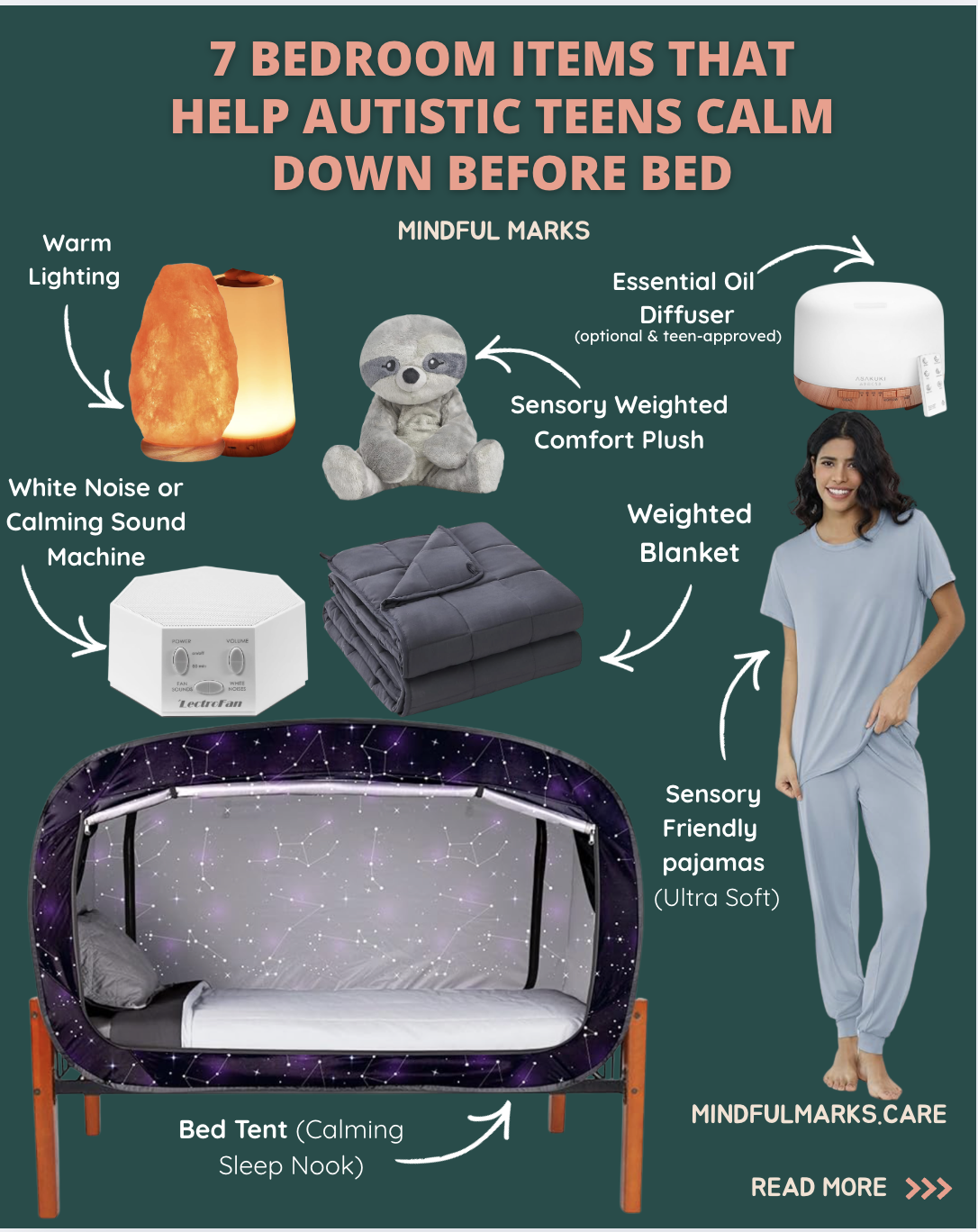
1. Weighted Blanket (or Deep Pressure Alternative)
Deep pressure can be incredibly calming for the nervous system.
Why it helps:
Provides proprioceptive input (body awareness)
Can reduce anxiety and restlessness
Helps the body feel grounded and secure
Tips:
Choose a blanket that’s about 10% of your teen’s body weight
Some teens prefer a weighted lap pad or compression sheet instead
Always let your teen choose—deep pressure should feel calming, not confining
2. Soft, Low Lighting (No Overhead Lights)
Bright lights signal the brain to stay awake—especially harsh overhead lighting.
Why it helps:
Encourages melatonin production
Reduces visual overstimulation
Creates a predictable “wind-down” signal
Helpful options:
Salt lamps
LED night lights with warm tones
Clip-on reading lights for nighttime comfort
Tip: Turn off overhead lights at least 60–90 minutes before bedtime.
3. White Noise or Calming Sound Machine
Many autistic teens are sensitive to sudden or inconsistent sounds.
Why it helps:
Masks unpredictable noise (cars, siblings, household sounds)
Provides consistent auditory input
Can reduce nighttime anxiety
Popular sound choices:
White noise
Rain or ocean sounds
Brown noise (lower, deeper tone—often preferred by teens)
Let your teen test different sounds and volumes—control builds comfort.
4. Comfortable, Sensory-Friendly Bedding & Pajamas
Scratchy tags, tight waistbands, or stiff fabrics can keep a teen awake all night.
Why it helps:
Reduces tactile discomfort
Prevents sensory irritation that causes tossing and turning
Look for:
Tag-free pajamas
Seamless socks (or sleeping without socks)
Breathable sheets (cotton or bamboo are often favorites)
Sometimes improving sleep starts with what they’re wearing.
5. A Predictable Visual Nighttime Routine
Many autistic teens feel calmer when they know exactly what’s coming next.
Why it helps:
Reduces anxiety around transitions
Supports executive functioning
Creates consistency that the nervous system relies on
Example routine:
Shower or wash face
Put on pajamas
Dim lights
Quiet activity (coloring, reading, journaling)
Bedtime
A simple visual schedule posted in the bedroom can be incredibly grounding.
6. A Calming Pre-Bed Regulation Activity
Sleep often comes more easily after the body releases built-up tension from the day.
Why it helps:
Signals the brain it’s safe to slow down
Helps process emotions quietly
Reduces bedtime resistance
Great options:
Therapeutic coloring or mandalas
Stretching or gentle yoga
Listening to an audiobook or calming music
Journaling thoughts before bed
Avoid screens whenever possible—especially fast-paced or emotionally charged content.
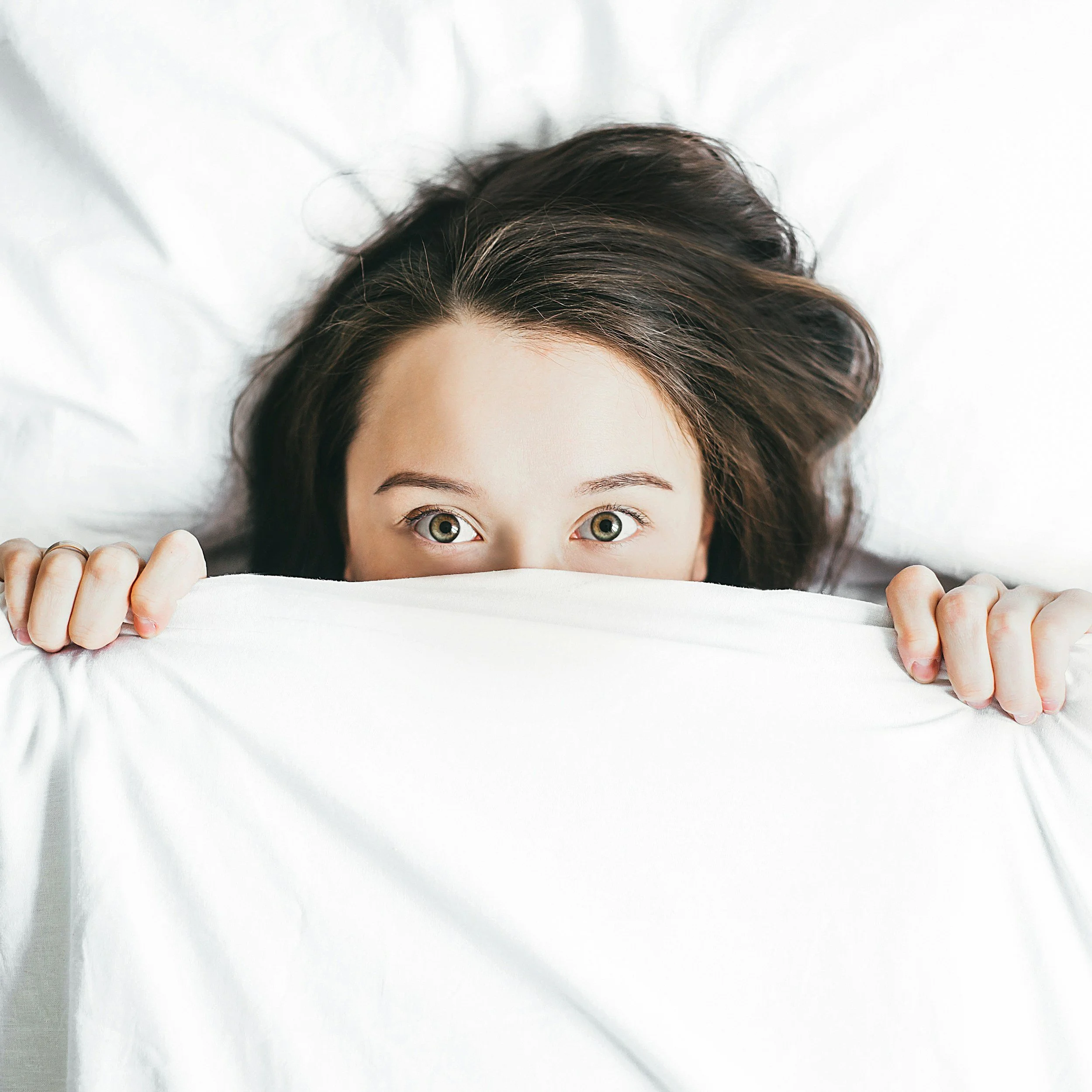
photo of: Autistic teen that can not sleep do to overstimulation
What Matters Most: Choice, Safety & Consistency
Not every item will work for every teen—and that’s okay.
The goal is to build a sleep environment that respects your teen’s sensory needs, not to force a “perfect” routine.
Sleep support works best when:
Your teen has choices
Changes are introduced slowly
Consistency is prioritized over perfection
Progress may be gradual—but calmer nights are possible.
Save For Later!
One Thing to Try Tonight
Tonight, choose one small change:
Dim the lights earlier
Add a calming sound
Introduce a quiet, regulation activity
Start there. Support builds sleep—one step at a time.
If bedtime feels stressful or chaotic, you’re not alone. Small, consistent changes can make evenings feel calmer for both teens and parents.
📘 Recommended next read:
“A Nighttime Regulation Routine for Autistic Teens” — practical strategies to help your teen decompress, regulate, and transition to rest.

Infographic of: A Nighttime Regulation Routine for Autistic Teens (step-by-step guide)