
What is “Masking” (or Camouflaging) in Autism?

A diverse group of teens smiling together outside, showing friendship, inclusion, and supportive peer relationships.
“Masking means hiding your natural autistic traits, copying others’ behavior, or suppressing stims just to appear ‘normal’. Over time, masking can lead to burnout, anxiety, and depression. Recognizing it is powerful. For more: research shows autistic teens and adults are more vulnerable to online harassment and social exhaustion.”
Introduction
If you’ve ever felt like you’re performing a social script—watching others, copying their tone, hiding the ways your brain really works—then you may have experienced what we call masking (also referred to as camouflaging) in the autism community. For autistic teens, young adults (and adults of all ages), masking can feel like a survival strategy: “Just blend in, don’t make waves, don’t be ‘that one’. ” But while masking may help you avoid immediate rejection, the longer-term cost can be high.
In this post from MindfulMarks.care, we’ll explore what masking is, why it happens, how to recognize it, and what you (and parents/educators) can do about it—especially because it often links with online harassment, social exhaustion, and mental-health challenges.
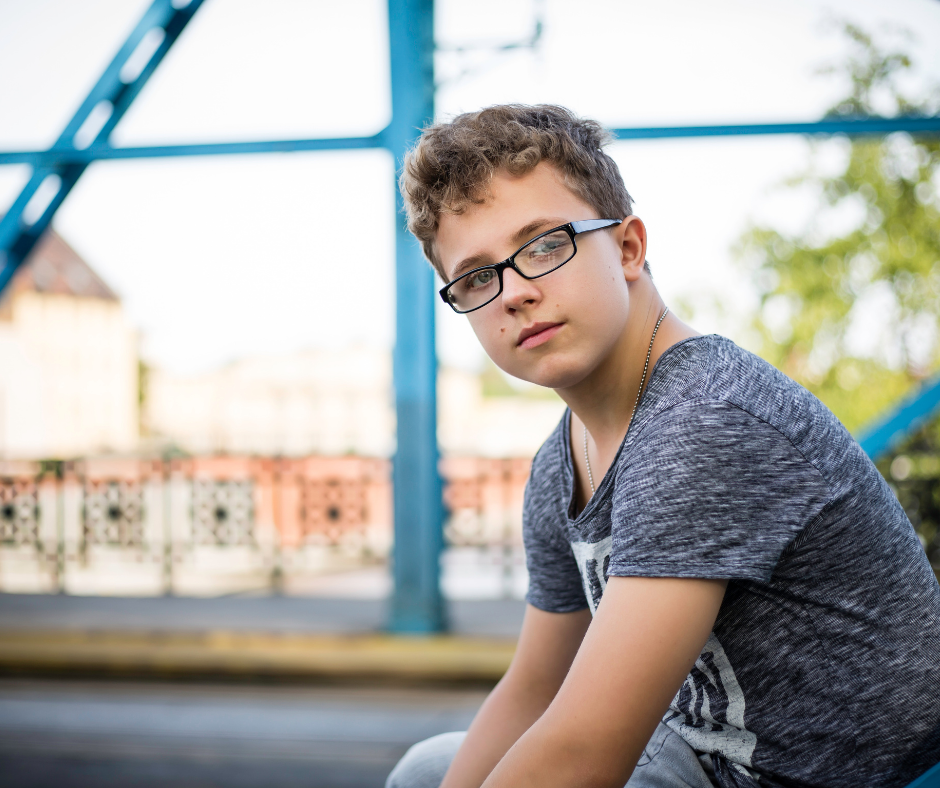
Autistic teen wearing glasses sitting outdoors, showing quiet reflection and self-awareness.
What is Masking / Camouflaging?
Masking refers to the behaviors and strategies that an autistic person uses to hide, suppress or modify their natural autistic traits so that they appear more “neurotypical” (non-autistic). This might include:
Forcing eye contact even when it is uncomfortable.
Suppressing stimming (repetitive movements, fidgeting, tapping) in public so you don’t draw attention.
Learning conversational scripts, mirroring others’ body language or tone to fit in.
Hiding your autistic interests or avoiding talking about them because you fear being judged “weird.”
Staying silent about sensory overload or emotional overwhelm so that you don’t “appear odd” or “out of control.”
In short: the aim is to fit in, be accepted, avoid stigma or rejection. As one article puts it: “Masking autism may sometimes help protect autistic people from being ‘outed’ or harassed at school or work.”
Why Does Masking Happen?
There are several underlying reasons and social pressures that drive masking:
Social pressure & Stigma
From early childhood into adolescence, autistic children may face bullying, exclusion, being told to “act normal,” or that their behaviours are “wrong.” To avoid negative social outcomes (peer rejection, being teased, not being invited), they learn to hide or suppress behaviours.
Safety & survival
For many autistic people, masking is a protective strategy: “If I behave like others, maybe I’ll not attract negative attention, maybe I’ll keep the peace.” This is especially true in environments where being visibly different can lead to discrimination, harassment or exclusion.
Gender and diagnosis dynamics
Research shows that some autistic girls and non-binary people may mask more effectively (or more often) than boys because societal expectations (about being socially adept, smiling, fitting in) are stronger. This masking can delay diagnosis or lead to misdiagnosis.
Wanting to belong
Beyond avoiding harm, some masking arises from a genuine desire: to form friendships, be part of the group, not feel isolated. The cost of being different can feel heavy, so masking seems like the path of least resistance.
The Hidden Costs: What Masking Does to You
Masking may help you survive socially—but it comes at a cost. Some of the key consequences:
Exhaustion and burnout
Constantly monitoring yourself, suppressing your natural responses, “acting” socially appropriate—all of that takes energy. Over time, autistic people report autistic burnout: overwhelming fatigue, shutdowns, cognitive and emotional exhaustion.
Anxiety, depression & identity challenges
Masking is strongly associated with increased anxiety, depression, lower self-esteem, and loss of authentic self. Because you’re always hiding parts of you, you may start wondering: “Who am I when I stop performing?” Studies show consistent links between camouflaging and mental-health difficulties.
Delayed or missed diagnosis
Because you’re masking, others (teachers, clinicians, peers) may not see your autistic traits. This may lead to under-recognition of support needs or later diagnosis. Particularly for girls and women, masking is one reason why autism can go un-diagnosed for years.
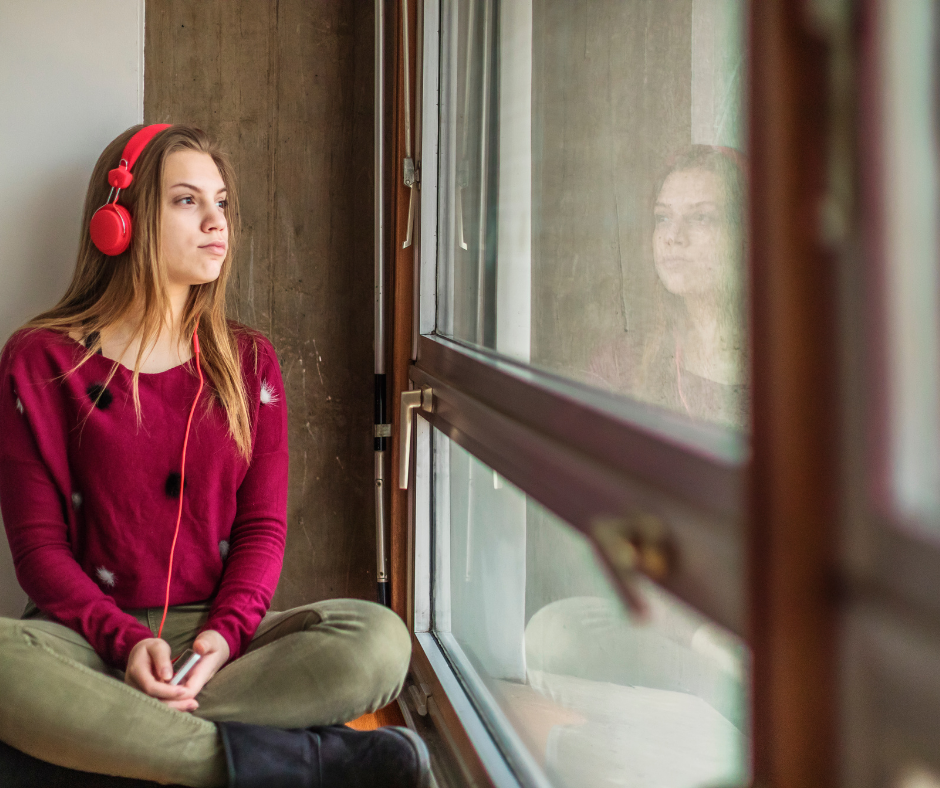
Autistic teen wearing headphones sits by a window, using music for sensory regulation and emotional calm.
Social fatigue, ruminations, and online risks
For teens and adults, especially those interacting online, masking can amplify vulnerability. For example: the website of Autism Society states autistic teens and young adults face “difficulty understanding online social cues, online harassment and social drama, and privacy concerns.”
If you’re already masking in face-to-face life, those extra layers of effort + online mis-interpretations + harassment can intensify—as you may be more likely to ruminate over hurtful interactions and feel isolated.
Recognising Masking: Signs for Teens, Parents, Educators
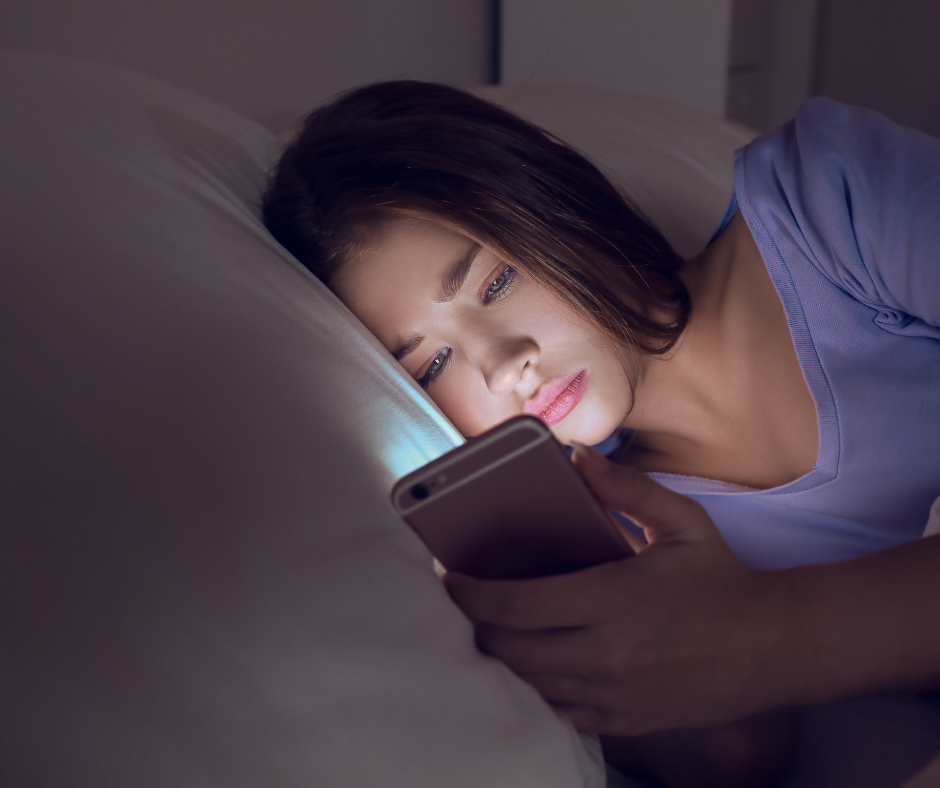
Autistic teen lying awake in bed using a phone at night, showing sleep challenges and nighttime overstimulation.
Here are some signs that masking may be happening—either you recognise them in yourself, or you notice them in a teen you support (for example your daughter Enijah Johnson). Recognising them is the first step toward change.
Personal signs you might notice:
After a social event you feel drained, like you “put on a show” rather than relaxed.
You find you “script” your conversation ahead of time, say things you’ve practised, or repeat phrases so you fit in.
You suppress stims or movements because you feel people are watching or judging you.
You pretend you’re okay (with sensory overload / emotional overwhelm) because you don’t want others to know you’re “struggling”.
You “zone out” or feel disconnected from yourself—wondering whether the person you were earlier in the day is really you.
You avoid certain social settings not because you dislike them necessarily, but because you’re tired of being “on” all the time.
Signs in teens/young adults you support:
Suddenly doing less of their special interest openly, or hiding it.
Apologising often for how they feel or why they act a certain way (“I’m sorry, I know I did that weird thing”).
Social media behaviour: they may present a polished “normal” version but then retreat offline in exhaustion.
After WiFi/social media interactions, they seem upset or ruminate more—especially if online harassment or mis-understanding happens.
You notice physical signs of overwhelm that get hidden (e.g., sensory meltdown later, but earlier they were pretending to be fine).

What You Can Do: Supports & Strategies
At MindfulMarks.care, we believe that recognising masking is powerful—and while we don’t encourage “masking more”, we do emphasise choosing when to unmask and create environments where you don’t need to mask so much. Here are strategies you can put into place.
1. Build safe “unmasking” spaces
Encourage the teen or person to identify people and places where they can be fully themselves (home, trusted group, therapy) without fear of judgement.
Affirm that stimming, special interests, sensory quirks are valid—having a space where you don’t have to suppress them helps replenish energy.
2. Teach and practise self-awareness
Help them recognise when they are masking and how it feels (tired, tense, on-edge).
Use prompts like: “How did I feel after that social event? Did I act different than I do at home?”
Encourage self-compassion: “It makes sense that I tried to fit in … now, what does my body/brain need?”
3. Plan micro-breaks & energy budgeting
If masking takes energy, plan for recovery: downtime, sensory‐friendly space, quiet time.
Teach “energy budgeting”: if you know you’ll have to mask for an event, schedule a recovery period afterwards.
4. Educate allies (parents, educators, peers)
Share resources about masking and its impact so that others can recognise when a teen is performing and might need support.
Model acceptance: “I don’t expect you to act like everyone else—just like you.”
Create classroom/home rules that allow for authenticity: stimming space, interest-sharing time, sensory breaks.
5. Online safety + mindful digital use
Recognise that autistic teens may be at higher risk of online harassment, misunderstanding social cues, and ruminating over interactions.
Talk about safe online behaviour, how to take breaks, how to de-brief after upsetting interactions.
Encourage digital environments where the teen can engage authentically (for example interest groups, neurodivergent friendly forums) rather than always performing to “fit in”.
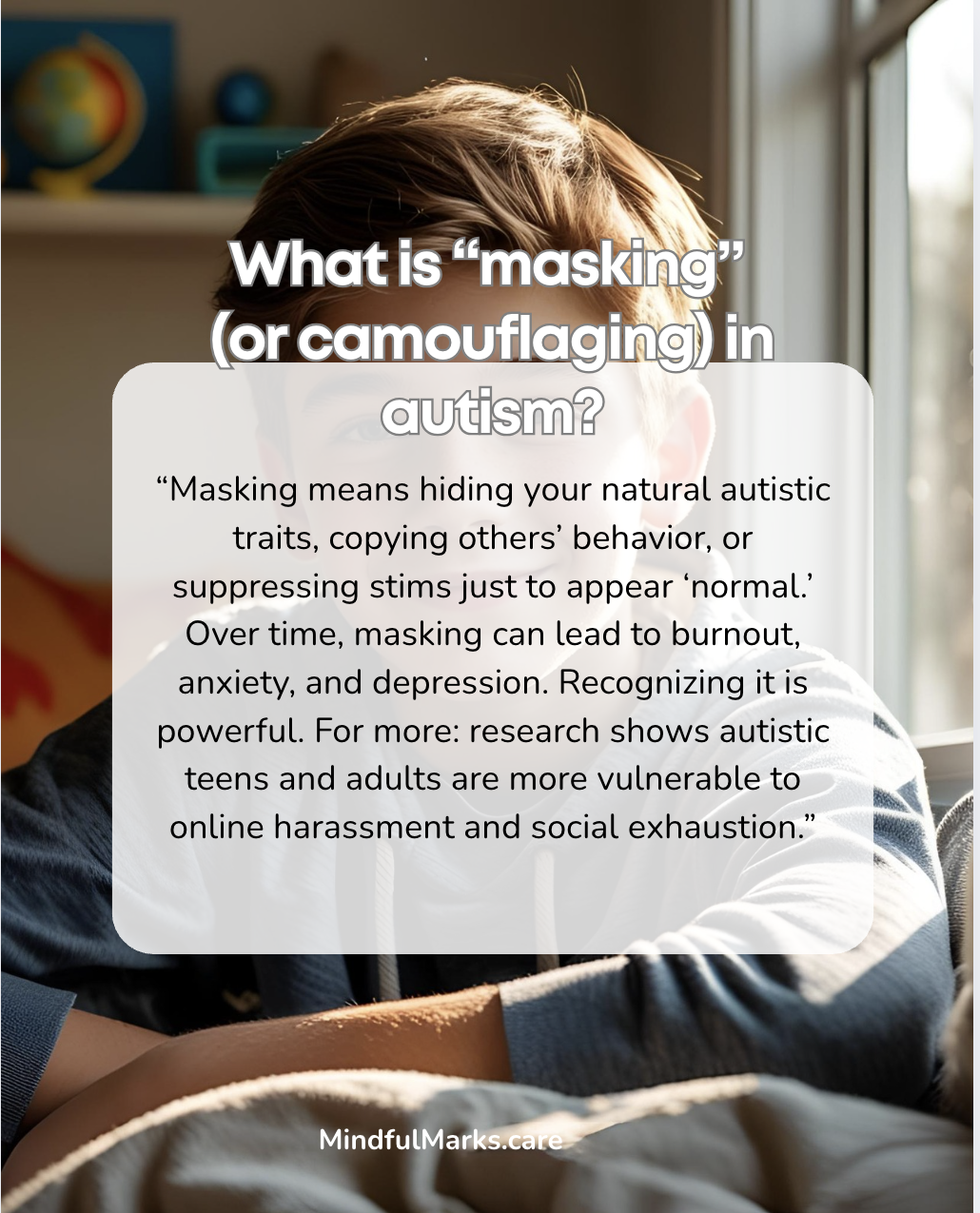
Teen featured alongside educational text about autism masking, describing the emotional impact of hiding autistic traits.
Why This Matters for Teens & Young Adults
For someone like Enijah Johnson (or any teen growing into adulthood), years of masking add up. They can result in
delayed self-understanding (“I don’t know who I am when I stop acting”),
missed support opportunities (because needs were hidden),
heightened risk of anxiety, depression and burnout,
and reduced opportunities for thriving as yourself (rather than only surviving).
But the good news is: recognising the mask is the first step toward authentic connection, self-advocacy, and greater well-being. At MindfulMarks.care, we believe that when autistic and neurodivergent teens can lower the performance and raise the authenticity, they open space for creativity (colouring, story-making, sensory expression), connection, calm and community. That’s aligned with our slogan: Bridging the gap between childhood and adulthood for autistic teens—one mindful mark, one calm moment at a time.
You don’t have to have everything figured out today.
Supporting an autistic teen is a journey, and learning happens one step at a time. At MindfulMarks.care, we’re here to walk alongside you with practical tools, gentle guidance, and resources designed to meet your teen where they are.
👉 Next, you may find this helpful:
“Social Fatigue” — why you feel whiped out but didn’t “Do Much.”

Person lying on a couch overwhelmed and exhausted, illustrating social fatigue and emotional burnout often experienced by neurodivergent individuals.