
Why Coloring Helps Autistic Brains (and Overwhelmed Brains): A Calm, Evidence-Informed Guide
If you’ve ever watched an autistic teen (or an autistic adult—especially after a late diagnosis) melt down after a long day… you know the hardest part isn’t “behavior.”
It’s the overload.
Too much noise. Too much social pressure. Too much thinking. Too many transitions. Too many demands.
And when a nervous system is carrying that much, “just relax” doesn’t work.
Many people are looking for something that is:
calming but not babyish
structured but not rigid
soothing without being a screen
accessible on hard days
That’s where coloring can become more than a hobby.
When it’s chosen well, coloring can function like a regulation tool—a small, repeatable ritual that helps the brain shift from high-alert to steadier ground.
This post is a detailed guide to:
why coloring can help autistic kids, teens, and adults
why certain coloring styles may work better than others
how contrast (black backgrounds, grayscale, bold lines) can support visual comfort
what the research says (without overpromising)
and how to choose a coloring book that actually helps
Autism is not something to cure.
This post is about support—reducing overload, increasing comfort, and building calm skills that respect autistic nervous systems.
Also: people respond differently. What’s regulating for one person can be irritating for another. We’ll keep everything flexible.
Why Coloring Can Help Autistic Nervous Systems (and Overwhelmed Nervous Systems)
Coloring tends to combine several supportive ingredients in one activity:
1) It creates “gentle focus” (without heavy language)
Many people feel calmer when attention has one simple place to land.
Coloring gives the brain a task that is:
predictable
repetitive
low-stakes
and visually contained
That kind of focus can reduce rumination and help the nervous system downshift.
Research on structured coloring (especially mandalas and complex geometric patterns) suggests it can reduce state anxiety in the short term for many people.[1][2]
2) It supports regulation through rhythm + repetition
Autistic nervous systems often benefit from:
predictable sequences
repeated motions
and activities that don’t require fast social processing
The repeated strokes of coloring can become a rhythm the body trusts.
3) It offers sensory input that can be controlled
With coloring, you can adjust:
lighting
tools (markers, pencils, gel pens)
pressure
pace
sensory environment
For autistic people with sensory sensitivities, control matters.
4) It creates a “bridge” when words are too hard
After a late autism diagnosis, many adults describe a season where emotions are big but language feels messy.
Coloring can be an emotional bridge—something you can do while processing, without needing to talk.
5) It can support mindfulness (without requiring meditation)
Some people love meditation.
Many autistic people find traditional meditation hard.
Coloring can offer mindfulness through doing rather than through stillness.
Health systems and mental health educators often describe coloring as a calming activity that supports stress relief and relaxation (again: not a cure, but a helpful tool).[3]
What the Research Says (Simple, Practical Summary)
Here’s the most honest, evidence-informed way to frame it:
Coloring is not a replacement for mental health care.
Coloring can reduce short-term anxiety for many people—especially structured coloring like mandalas.
Key examples:
A classic study found structured coloring (mandalas or plaid patterns) reduced anxiety more than unstructured free coloring after an anxiety induction.[1]
A systematic review and meta-analysis (2022) examined mandala coloring and state anxiety and found overall evidence of anxiety reduction across studies (with the usual limits of research quality and variation).[4]
More recent research continues to explore mandala coloring (paper and digital) and psychophysiological markers like heart rate in anxiety reduction contexts.[5]
What this means for your home:
Coloring is a low-risk, low-cost support tool that many people find calming.
And when it works, it often works because it helps someone reach a state of flow—focused, absorbed, less flooded.
Why “The Right Coloring Book” Matters (Not All Books Feel the Same)
A common frustration is:
“I tried coloring and it didn’t help. It made me more stressed.”
That can happen when the design mismatches the person.
Differences that matter:
line thickness
complexity level
page layout and crowding
contrast and background color
how predictable the patterns feel
So let’s talk about contrast and format—because this is where Mindful Marks books can be intentionally supportive.
Contrast and Autism: Why Black Backgrounds, Grayscale, and Clean Layouts Can Help
Important: the research on contrast preferences in autism is complex, and not everyone has the same sensory profile.
But many autistic people experience sensory differences in:
light sensitivity
visual processing
visual fatigue
pattern sensitivity
Research on visual processing in autism includes differences in contrast sensitivity and motion perception in some groups (not as a “deficit,” but as a different processing profile).[6]
Separately, research on visual fatigue and lighting/background polarity suggests that dark backgrounds can reduce glare for some people—while being worse for others depending on environment and vision needs.[7]
So here’s the most helpful way to present this to readers:
The goal is visual comfort, not “one perfect setting.”
Different contrast options give people choice.
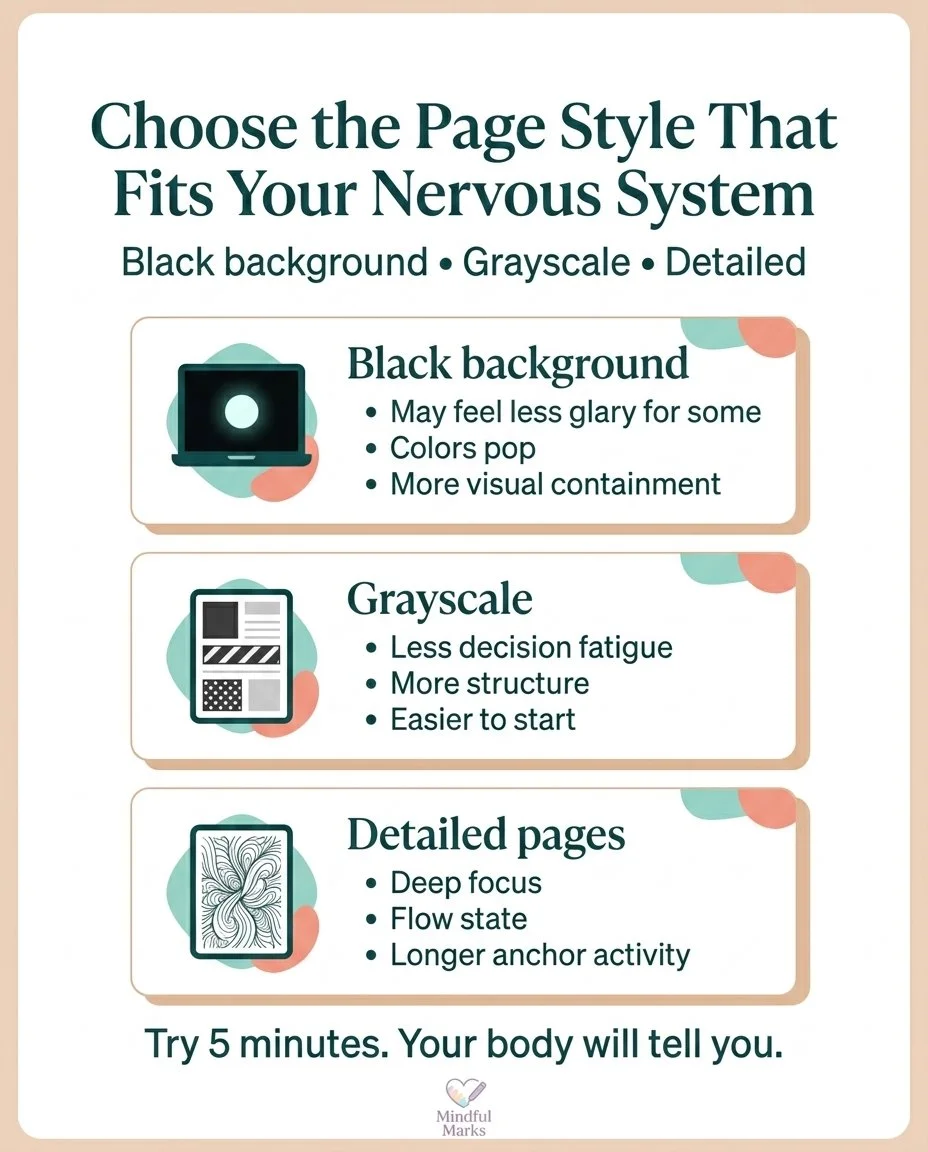
Below are three design styles that often support sensory-friendly coloring.
Style 1: Black-Background Coloring (High Contrast, Lower Glare for Some)
Black-background pages can be supportive for people who:
feel visually overloaded by bright white pages
prefer vivid colors popping against dark backgrounds
experience glare sensitivity
Why it can help:
dark backgrounds may reduce perceived brightness/glare in some environments
the page can feel more “contained” visually
colors look more saturated, which can increase motivation and engagement
When it might not be the best fit:
if high contrast feels too intense
if dark pages make details harder to see
Gentle suggestion:
Try it for 5 minutes. If your body relaxes, that’s data. If your eyes tense, that’s also data.
Style 2: Grayscale Coloring (Less Decision Fatigue, More Structure)
Grayscale coloring gives shading already.
This can help people who:
feel overwhelmed by too many choices
want a clearer “path” to a finished-looking page
enjoy structure and predictability
Why it can help autistic teens and late-diagnosed adults:
fewer decisions = less cognitive load
the brain can settle faster because there’s a plan built in
it can be easier to start (task initiation support)
This style often supports people who want calm without needing to be “creative on demand.”
Style 3: Highly Detailed / Intricate Coloring (Deep Focus + Flow)
Highly detailed pages can be regulating for people who:
love deep focus
enjoy precision
feel calmer when absorbed in complexity
Why it can help:
supports flow state for people who like complexity
provides a longer “anchor” activity
When it might not be best:
if complexity triggers perfectionism
if fine detail feels visually exhausting
A supportive tweak:
Use markers/pens for broad areas and pencils for detail—mixing tools can reduce frustration.
Here are a few Practical, Real-Life Helpful Tips & Tricks
Choose based on nervous system needs
(not what you “should” like)
Ask:
“Do I need less brightness?” (try black background)
“Do I need fewer decisions?” (try grayscale)
“Do I need deep focus?” (try detailed pages)
Make a “minimum viable” coloring session
If capacity is low:
choose one small section of a page
set a 5–10 minute timer
stop when it ends
Build a sensory-friendly setup
warm lamp instead of overhead light
headphones or quiet
comfortable seating
favorite drink
tools that feel good in your hands
If this is for autistic teens
offer choice without pressure
avoid forcing “sit still” rules
let it be a regulation tool, not a performance
Common Myths
(That Can Create Pressure)
Myth: “Coloring only helps kids.”
Adults benefit too—especially adults navigating stress, burnout, anxiety, and late diagnosis.
Myth: “If it doesn’t work instantly, it doesn’t work.”
Some people need the right format (black background vs grayscale vs detailed) before it clicks.
Myth: “Coloring is childish.”
A nervous system doesn’t care if something is trendy. It cares if something helps.
One Thing to Try Tonight
(Low Pressure)
If you’re reading this while tired, try this:
Pick a page style that matches your need:
black background for visual comfort
grayscale for decision fatigue
detailed for deep focus
Set a 7-minute timer.
Color one small area.
Then ask:
“Did my shoulders drop even a little?”
That’s the metric.

Resources:
Curry, N. A., & Kasser, T. (2005). Can Coloring Mandalas Reduce Anxiety? (Art Therapy).[1]
Systematic review/meta-analysis on mandala coloring and state anxiety (2022).[2]
Mayo Clinic Health System: mental health benefits of coloring (general audience).[8]
Visual processing research example in autism (contrast sensitivity/motion processing).[6]
Visual comfort / dark mode and glare (general eye strain info).[7]
If you or your teen is in crisis or immediate danger, contact local emergency services. In the U.S., you can call/text 988for support.
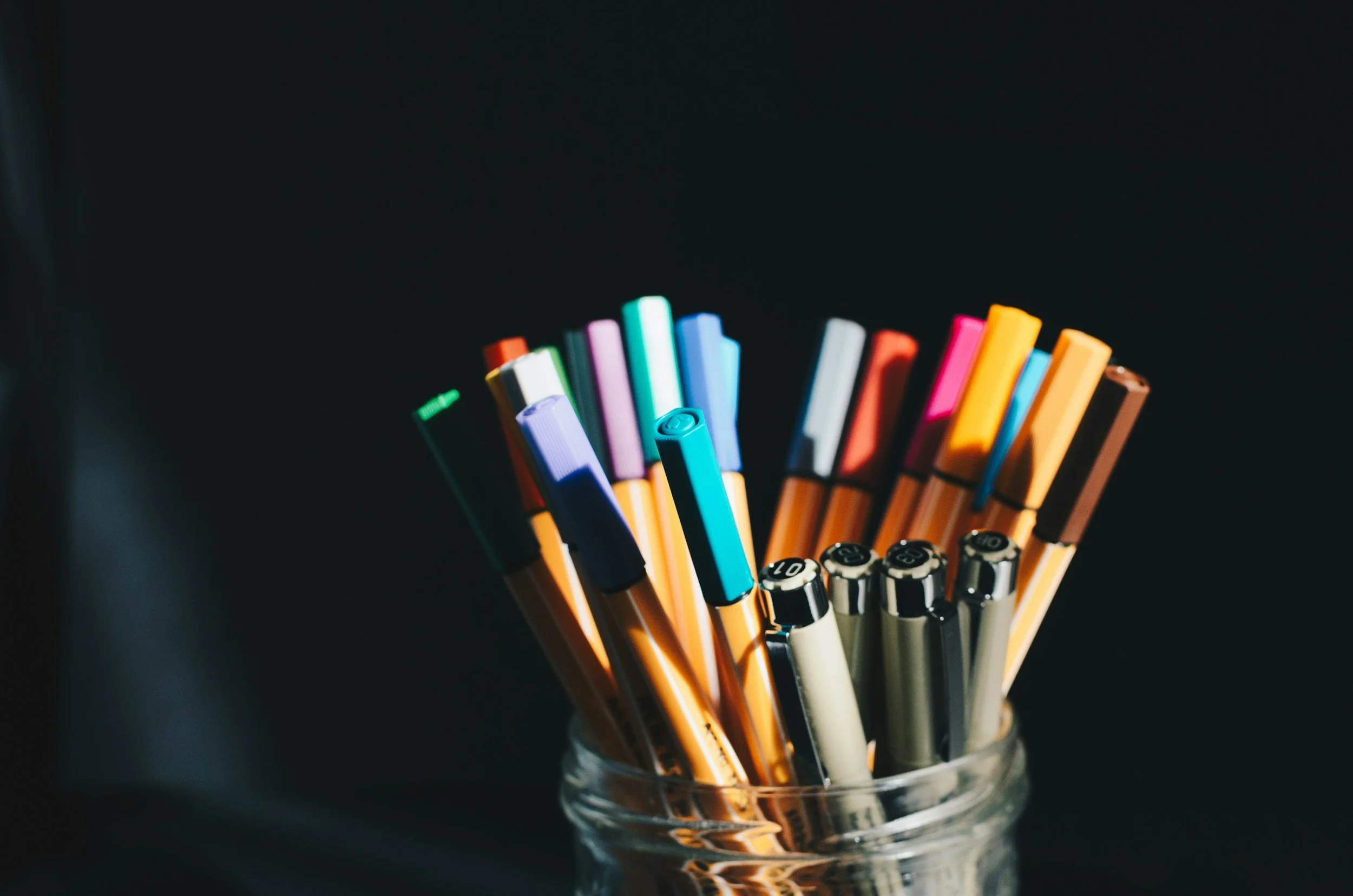
Coloring isn’t magic.
But it can be a surprisingly powerful support tool—especially when it’s designed with sensory needs in mind.
For autistic kids, teens, and adults (including late-diagnosed adults), the right coloring format can support:
calmer nervous system states
gentler focus
reduced decision fatigue
a break from performance
and a sense of control on hard days
And sometimes, that’s the beginning of a better day.
If you’d like a coloring book designed for calm, clarity, and sensory-friendly support—including options like black-background pages, detailed designs, and grayscale styles—you’re welcome to browse our Mindful Marks coloring books on Amazon: