Our Calm Corner Setup-
Empowering Neurodivergent Children & Teens with Peace and Choice
At Mindful Marks we believe that every child deserves a space where they feel safe, respected, and in control. Our calm corner isn’t just a cozy spot—it’s a powerful, healing space where autistic and neurodivergent children and teens can pause, breathe, and reconnect with themselves.
Instead of forcing children to “calm down” through external pressure, we offer a place where they choose how to regulate, express, and recharge. Whether it’s after a long day, during a meltdown, or simply a moment to breathe, our calm corner meets them where they are—without judgment.
Here’s what we include in our calm corner—and how each item helps empower, support, and affirm our children.
First of all, What Is a Calm Corner, Really?
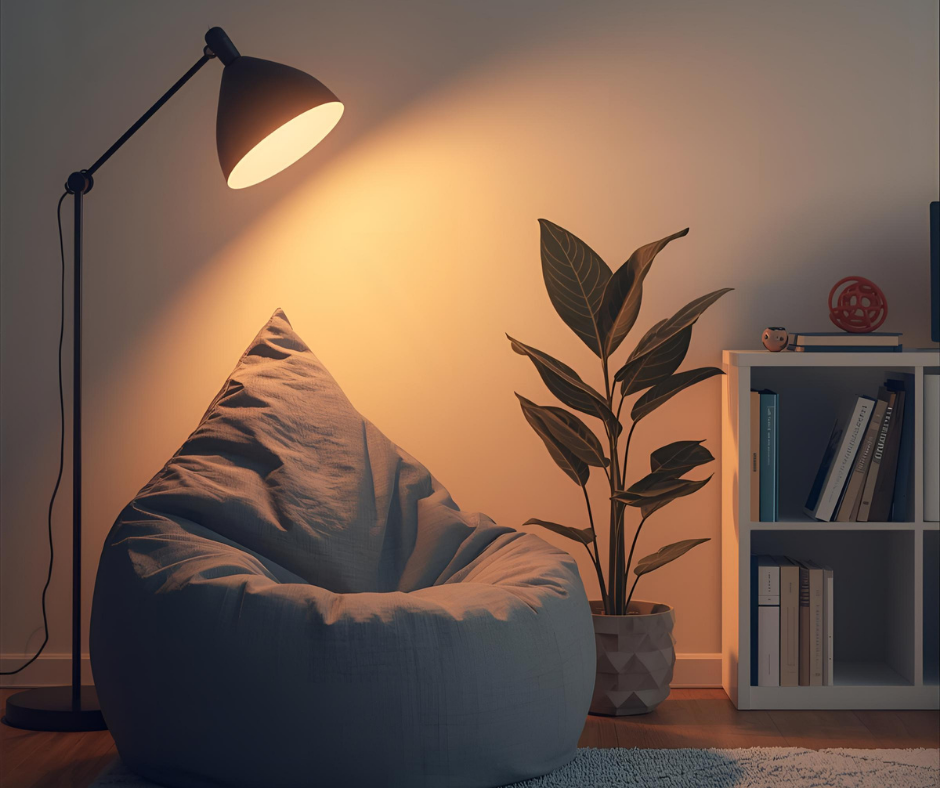
Cozy calm corner with a bean bag chair, warm lighting, plant, and bookshelf.
A calm corner is a freedom space—a non-judgmental zone that honors emotions, supports regulation, and offers real, accessible tools for coping. It’s never used as punishment. Instead, it’s a supportive invitation:
“You deserve space. You are allowed to feel. Let’s take care of you.”
Inside Our Calm Corner: What We Include and Why
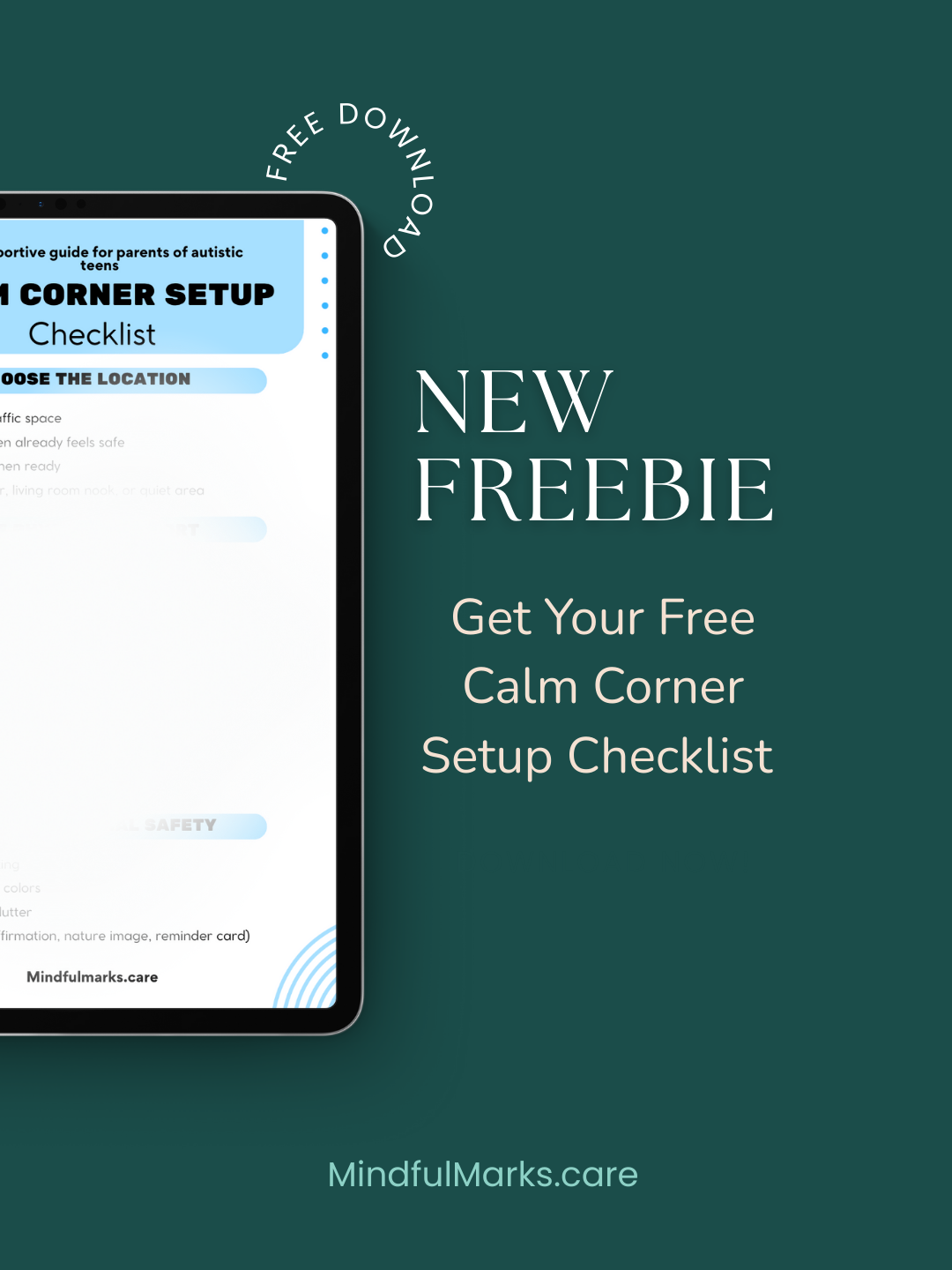
If a calmer home feels supportive right now, you’re welcome to grab our Calm Corner Checklist. It walks you through a few small steps to set up a space that feels safe, soothing, and easy to use.
1. Cozy Comfort + Weighted Support
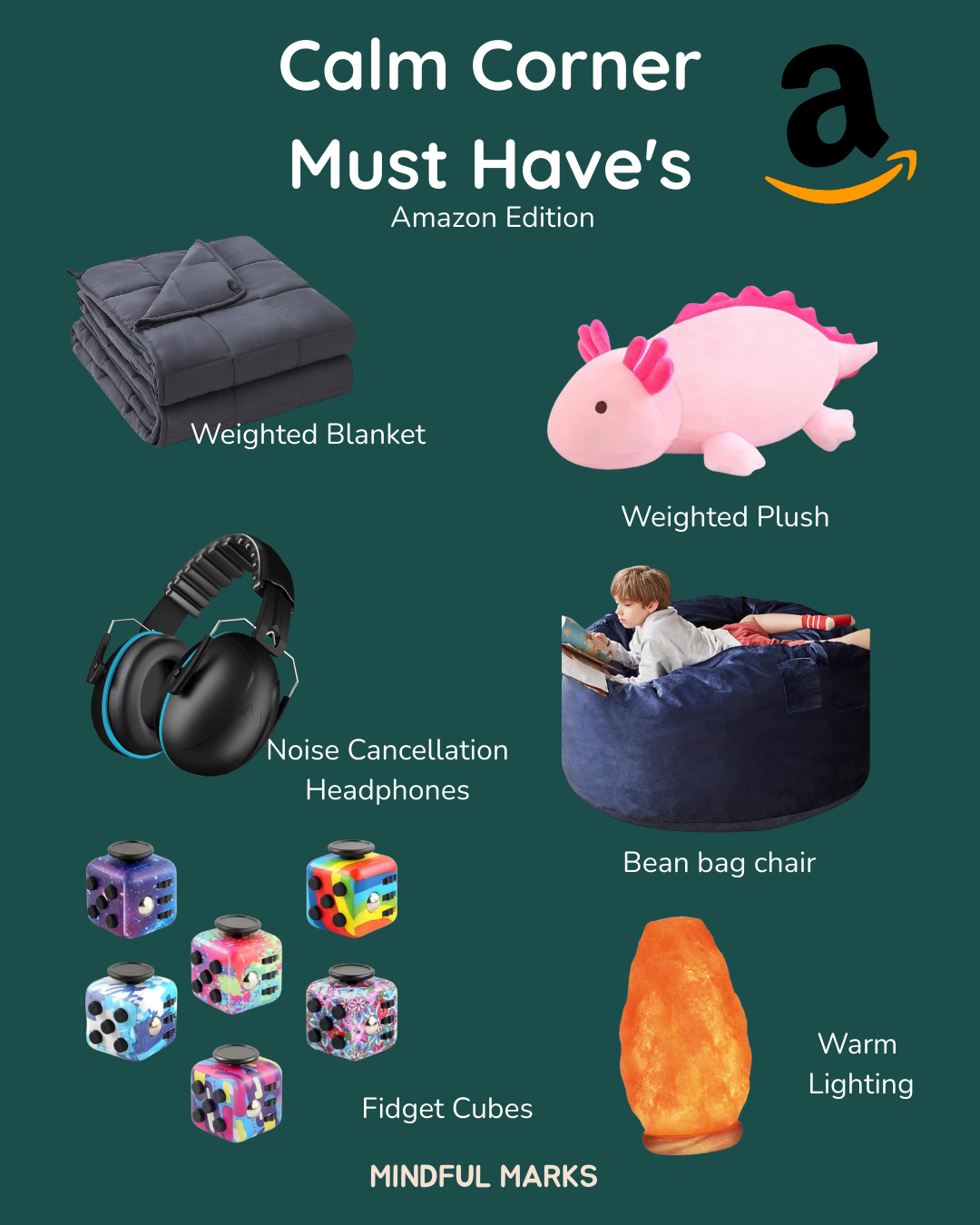
What’s Included: A soft floor cushion, a calming weighted lap pad, and a comfy blanket.
Why It Empowers: Comfort is not a luxury—it’s a basic need. Deep pressure tools like weighted pads provide grounding and reassurance, especially during moments of sensory overwhelm.
It says: “You don’t have to hold everything right now. You are safe to rest.”
2. Coloring as Calm and Creative Expression
What’s Included: Our Mindful Marks sensory-friendly coloring books, markers, and gel pens.
Why It Empowers: Coloring is a low-pressure, high-reward activity. There are no right or wrong answers—just a flow of creativity and calm. It offers emotional expression, focus, and joy without needing words.
✨ Especially for teens, coloring offers a sense of ownership and peace without performance.
3. Fidgets & Sensory Tools for Self-Regulation
What’s Included: Stress balls, silent fidget tools, textured fabric, and squishy putty.
Why It Empowers: These tools provide sensory input that soothes and supports the nervous system. More importantly, they offer choice—the child gets to decide how to calm themselves.
Empowerment begins with options—not instructions.
4. Emotion & Visual Regulation Supports
What’s Included: A feelings chart, calming choice cards, and visual timers.
Why It Empowers: Identifying emotions is hard—but it’s a skill that grows with support. These visuals give kids the language and structure to understand themselves, and choose a path forward.
We’re not telling them how to feel—we’re giving them the tools to explore their feelings safely.
5. Sound & Light for Sensory Control
What’s Included: Noise-canceling headphones, soft lighting, and a small speaker with calming sounds.
Why It Empowers: Lighting and sound can be overwhelming. Giving teens the ability to adjust their environment teaches agency, boundaries, and body awareness.
It says: “You are the expert of your own comfort.”
6. Books, Affirmations & Mindful Grounding
What’s Included: Sensory-friendly storybooks, daily affirmation cards, and grounding technique visuals.
Why It Empowers: Sometimes, words from someone else remind us who we are. Affirmations like “I am safe. I am strong. I am learning.” help reframe stress and build resilience.
We also include our Elijah & Sophia stories—representing autistic children in empowering, relatable ways.
7. Personalization + Choice = Power
What’s Included: The child’s photo, a favorite plush or comfort item, and a rotating “choose-your-tool” basket.
Why It Empowers: Children (especially neurodivergent teens) deserve to feel seen and in control. This space isn’t ours—it’s theirs.
Personalizing the space reinforces that this is not a timeout—it’s a toolbox.
Why Calm Corners Matter for All Ages
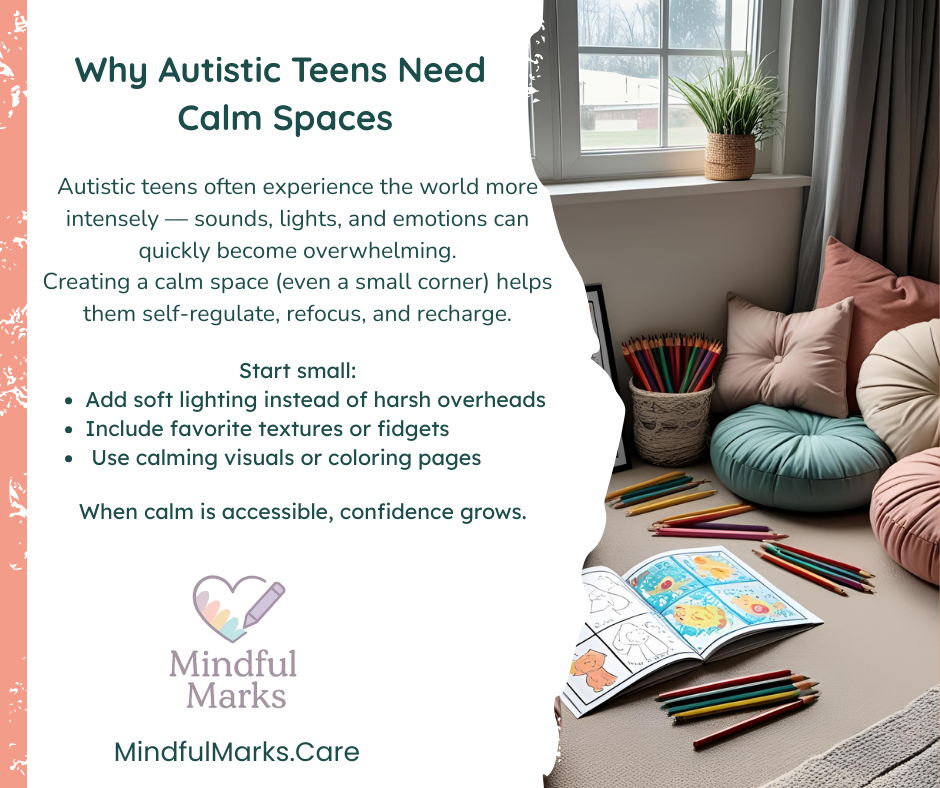
This isn’t just for little kids. Teens and even adults need moments of pause and places to process. For autistic preteens and teens especially, calm corners provide:
A break from masking
Space to recover from overstimulation
A non-verbal outlet for expression
Emotional safety to regroup after hard moments
Want to Create Your Own?
We’ve created downloadable tools and resources to help you build a calm space at home, in classrooms, or in therapy settings:
Final Thought from us:
Empowering a child to regulate themselves isn't about controlling their behavior—it’s about giving them the tools to listen to their body, honor their needs, and respond with confidence.
When we create calm corners with love and intention, we’re not just setting up a space—we’re shaping a world where neurodivergent kids feel safe, seen, and strong.
Quick Links For Your Convenience!