
Sibling Relationships & Family Dynamics in the Teen Years
When one child in the family is autistic, sibling relationships often take on new layers of complexity, compassion, and growth. While most family resources focus on parents or the autistic child, siblings’ experiences deserve equal attention—especially during the teen years when everyone’s sense of identity is changing.
This stage can be both challenging and deeply meaningful. Understanding sibling dynamics can help parents foster connection, reduce resentment, and create a supportive family environment for everyone.

Why Sibling Relationships Matter
If helpful, you can download the Sibling Connection Guide and choose just one idea to try this week. No big talks required. Small moments still count.
Siblings often spend more time together than anyone else in the family. Their bond can shape empathy, communication skills, and emotional resilience on both sides.
For autistic and neurotypical siblings alike, this relationship becomes a lifelong influence—teaching acceptance, patience, and love that extends far beyond childhood.
But in adolescence, as teens begin exploring independence, differences can feel sharper. Neurotypical siblings may struggle to balance their own needs with caregiving roles, while autistic teens might feel misunderstood or left out of typical sibling activities. Recognizing these shifts helps families support both perspectives.
Common Challenges in the Teen Years
1. Changing Roles and Responsibilities
As teens mature, they naturally crave autonomy. However, some siblings of autistic teens may feel responsible for “keeping the peace” or helping manage meltdowns. Without clear boundaries, this can lead to emotional fatigue.
Tip: Clarify that helping is appreciated, but caregiving is not their job. Encourage shared activities that are about fun and connection—not responsibility.
2. Feelings of Unequal Attention
Parents may unintentionally spend more time addressing the needs of their autistic teen, leaving the other sibling feeling overlooked. This imbalance can cause quiet resentment or guilt.
Tip: Schedule one-on-one moments with each child. Even short, focused time signals that every family member’s needs matter.
3. Miscommunication and Frustration
Autistic teens may struggle with social cues, while their siblings may not fully understand sensory or communication differences. What looks like “ignoring” or “overreacting” may be a sign of overload or difficulty processing emotions.
Tip: Teach all siblings about sensory needs and communication differences. Understanding builds patience and reduces conflict.
Supporting Positive Sibling Connections
1. Encourage Shared Interests
Focus on what both teens enjoy—video games, art, cooking, music, or sports. Parallel play (doing activities side by side rather than directly together) can also be a comfortable, bonding experience.
2. Create Safe Spaces for Expression
Let siblings express both positive and difficult emotions without guilt. It’s normal for them to feel proud, frustrated, protective, or jealous—all at once. Family journaling or private “vent sessions” can help release tension safely.
3. Teach Empathy in Both Directions
Neurotypical siblings can learn to understand sensory overload or social fatigue, while autistic siblings can be supported in recognizing others’ emotions. Modeling calm, respectful communication helps everyone.
4. Celebrate Each Child’s Achievements
Autistic and neurotypical siblings both deserve recognition for their unique strengths—academic, creative, or emotional. Celebrate milestones equally, and avoid comparisons.
5. Family Meetings for Problem-Solving
Short, structured check-ins allow everyone to voice needs, share wins, and discuss what’s working or not. This models teamwork and gives every sibling a voice in family routines.
Save this for later!
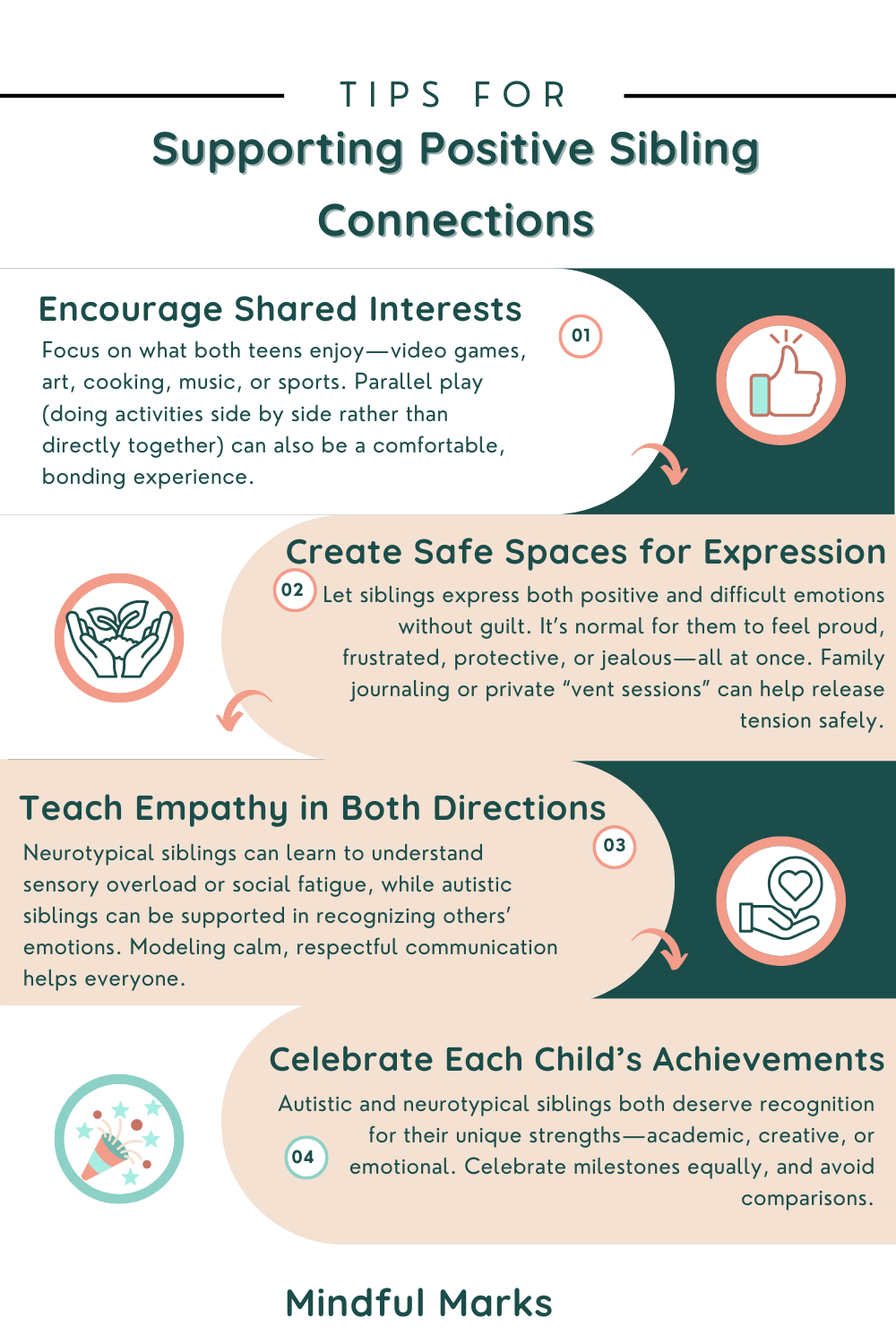
Infographic of: Tips for Supporting Positive Sibling Connections ( teens with autism)
Helping Parents Support Both Sides
Stay neutral in conflicts. Instead of choosing sides, guide both siblings to understand each other’s perspectives.
Balance privacy and inclusion. Encourage shared family activities, but also allow teens to have their own social space.
Use inclusive language. “Our family works together to support each other,” instead of “We all help your brother.”
Model acceptance. Your tone sets the emotional climate—if you stay calm and curious, your children are more likely to follow.
When Extra Support Helps
Sometimes sibling relationships become strained despite everyone’s best efforts. If arguments escalate or one child withdraws emotionally, family counseling or sibling support groups can help. Many autism organizations now offer peer-support spaces for siblings to share feelings openly and learn coping tools.

Photo of: Autistic Teen Siblings play a video game together.
Final Thoughts
Sibling relationships during the teen years can be a mix of growth, tension, and love. When families take the time to listen, educate, and include every child, those bonds often grow stronger—and last a lifetime.
Supporting each sibling doesn’t mean balancing everything perfectly. It means helping every child feel seen, safe, and valued in their own way.
Get your copy of our Sibling Connection Guide for Autistic teens below!
Infographic of: Sibling Connection Guide for autistic teens and their parents