
Fidget Spinners for Autistic Teens: What Actually Helps (And What to Avoid)
Fidget spinners are often misunderstood. Some see them as toys or distractions—but for many autistic teens, they’re a regulation tool that helps the nervous system stay balanced during focus, stress, or sensory overload.
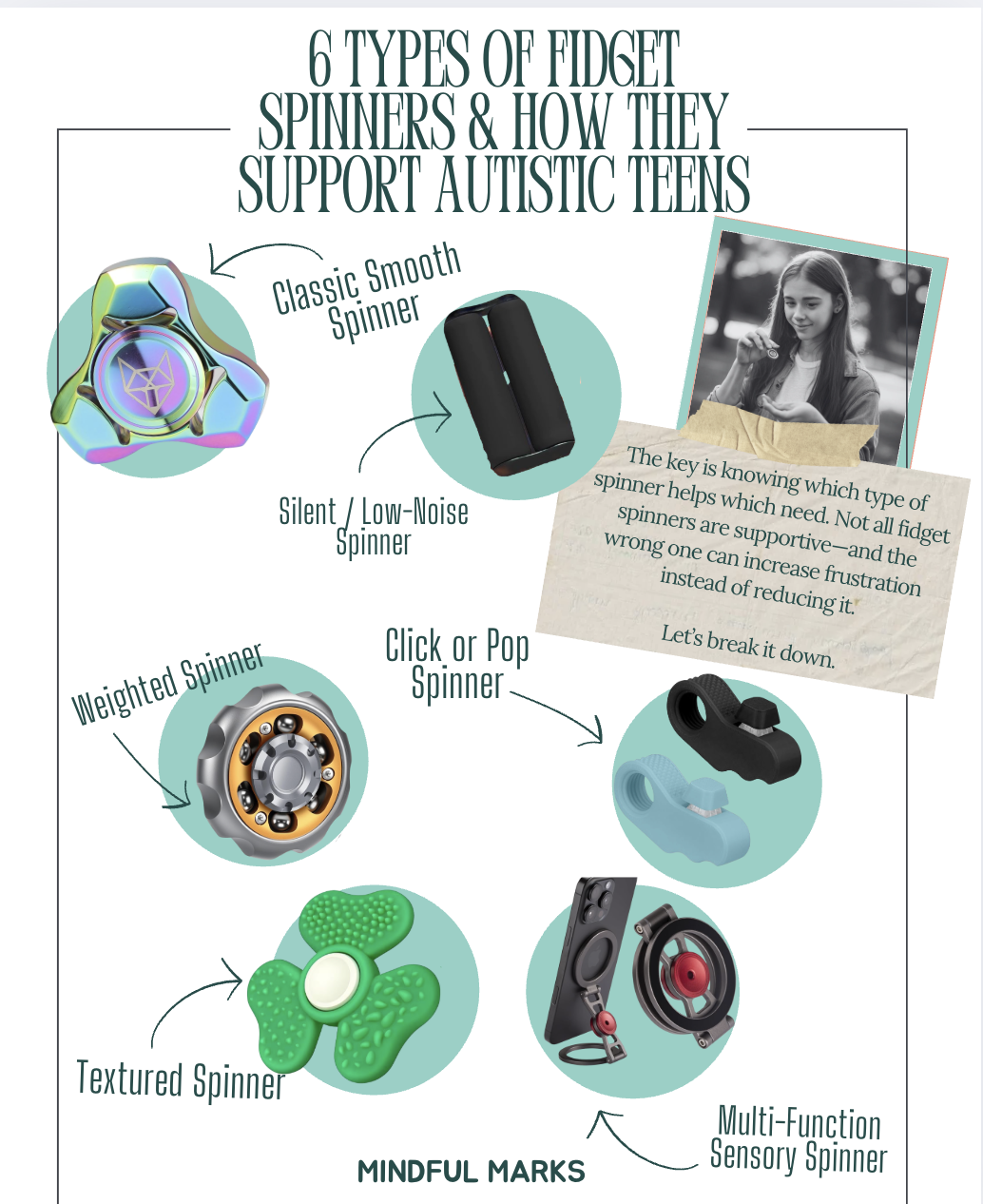
The key is knowing which type of spinner helps which need. Not all fidget spinners are supportive—and the wrong one can increase frustration instead of reducing it.
Let’s break it down.
Why Fidget Spinners Help Autistic Teens
Autistic teens often experience differences in:
Sensory processing
Motor regulation
Anxiety and emotional regulation
Attention and executive functioning
Fidget spinners provide repetitive, predictable movement, which can:
Reduce internal restlessness
Improve focus during tasks
Offer calming sensory input
Prevent more disruptive self-stimulatory behaviors
This isn’t about stopping stimming—it’s about supporting it safely and respectfully.
Save For Later!
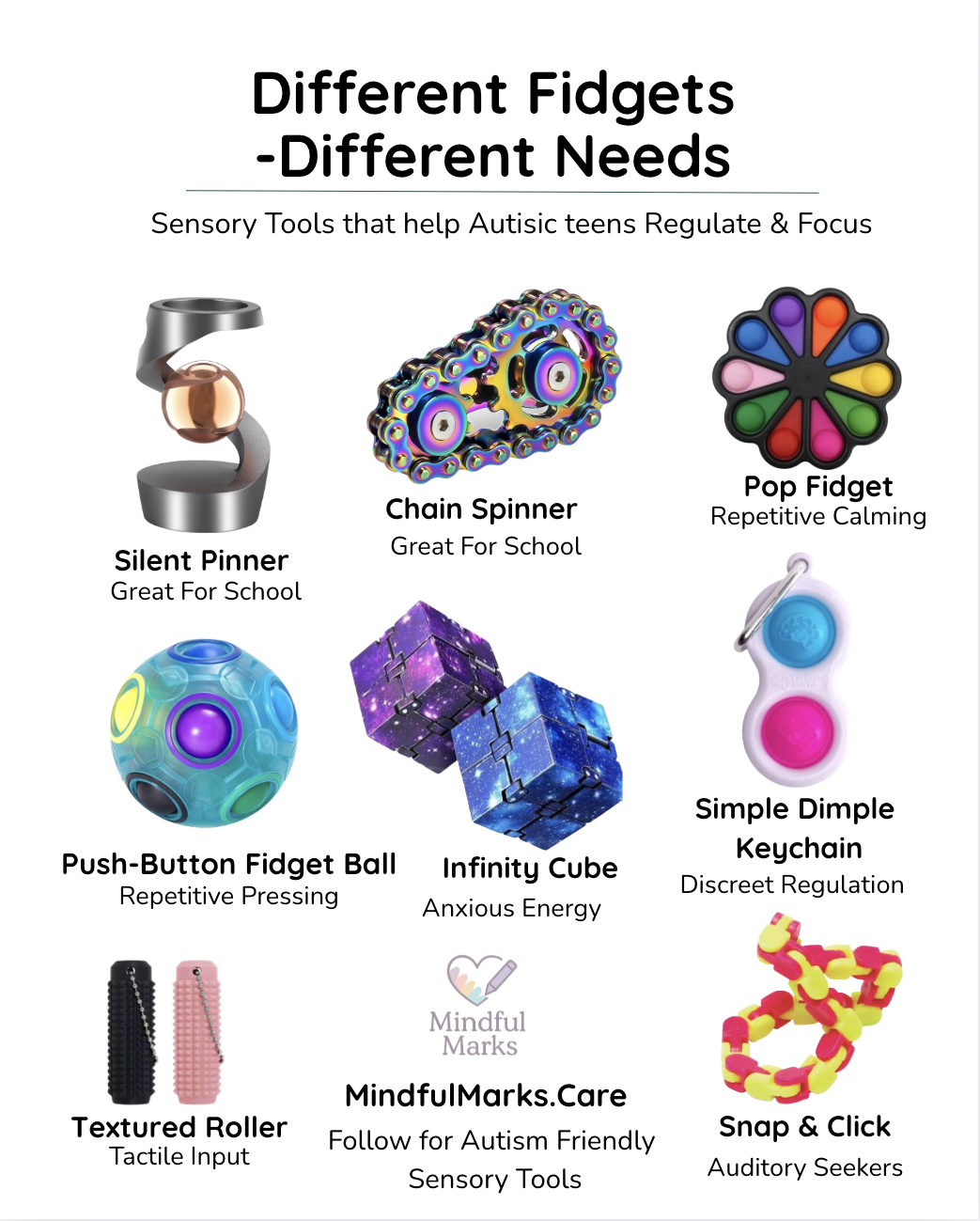
Infographic of:Sensory Tools that help Autistic teens Regulate & Focus
The 6 Most Common Types of Fidget Spinners (Explained)
1. Classic Smooth Spinners
These offer steady motion without extra stimulation. Many teens use them during homework, listening tasks, or quiet activities.
Watch for: Over-spinning during conversations—this may mean the task is too demanding.
2. Silent / Low-Noise Spinners
Ideal for classrooms or therapy settings where sound sensitivity matters.
Helpful tip: Teachers are often more accepting of spinners when they’re quiet and unobtrusive.
3. Weighted Spinners
The added resistance provides grounding input, which can reduce anxiety and improve body awareness.
Best for: Teens who press hard, clench fists, or seek deep pressure.
4. Textured Spinners
These combine tactile input with movement—great for teens who seek touch-based sensory feedback.
Note: Some textures can become overstimulating. Choice matters.
5. Click or Pop Spinners
These provide sound and feedback, which some teens love—but others find overwhelming.
Use carefully: Better for breaks, not sustained focus time.
6. Multi-Function Sensory Spinners
These offer variety and flexibility, helping teens discover what input works best.
Great for: Teens still learning their sensory preferences.
Quick Links For your Convenience!
Who Fidget Spinners Are Most Helpful For (And Why)
Fidget spinners aren’t helpful for every autistic teen — and that’s okay. Like all sensory tools, they work best when they match a specific need, not a behavior we’re trying to control.
Here are some situations where fidget spinners are often especially supportive.
✔ Autistic Teens Who Need Movement to Focus
Some teens focus better when their hands are busy. A fidget spinner can provide gentle, repetitive motion that helps the brain stay engaged during listening, reading, or thinking tasks.
Why it helps:
The predictable movement supports attention without demanding extra mental effort.
✔ Teens Who Experience Anxiety or Internal Restlessness
For teens who feel tense, fidgety, or “on edge,” spinning can be calming.
Why it helps:
Repetitive motion gives the nervous system something steady to anchor to, helping reduce anxious energy.
✔ Teens Who Struggle With Transitions
Transitions — starting school, switching activities, waiting — can be especially stressful.
Why it helps:
Holding a familiar sensory tool during transitions can provide comfort and continuity.
✔ Teens Who Seek Sensory Input Through Their Hands
Some autistic teens naturally stim through touch, pressure, or movement.
Why it helps:
Fidget spinners offer a safe, socially accepted way to meet sensory needs without suppressing stimming.
✔ Teens Who Benefit From Quiet Regulation Tools
Low-noise or silent spinners are ideal for classrooms, therapy sessions, or shared spaces.
Why it helps:
They provide regulation without drawing attention or adding extra sensory input.
When Fidget Spinners May Not Be the Best Fit
Fidget spinners may be less helpful for teens who:
Become more dysregulated by fast movement
Are sensitive to spinning visuals or clicking sounds
Use spinners in a way that increases distraction rather than calm
In these cases, other tools (like putty, weighted items, or slow tactile fidgets) may be a better match.
A Gentle Reminder
Fidget spinners are supports, not solutions.
The goal isn’t to stop movement — it’s to help autistic teens feel regulated, comfortable, and respected in their bodies.
If a spinner helps your teen feel calmer or more focused, it’s doing its job.
What to Avoid When Choosing a Fidget Spinner
🚫 Extremely loud spinners in shared spaces
🚫 Overly complex designs that distract rather than regulate
🚫 Removing a spinner as punishment
🚫 Assuming one spinner works for every situation
A spinner that helps at home may not help at school—and that’s okay.
How to Introduce Fidget Spinners Successfully
Try this supportive approach:
Offer choice, not rules
Explain purpose (“This helps your body focus”)
Create boundaries together (when and where it helps most)
Observe, don’t assume
When teens feel respected, they’re more likely to use tools appropriately.
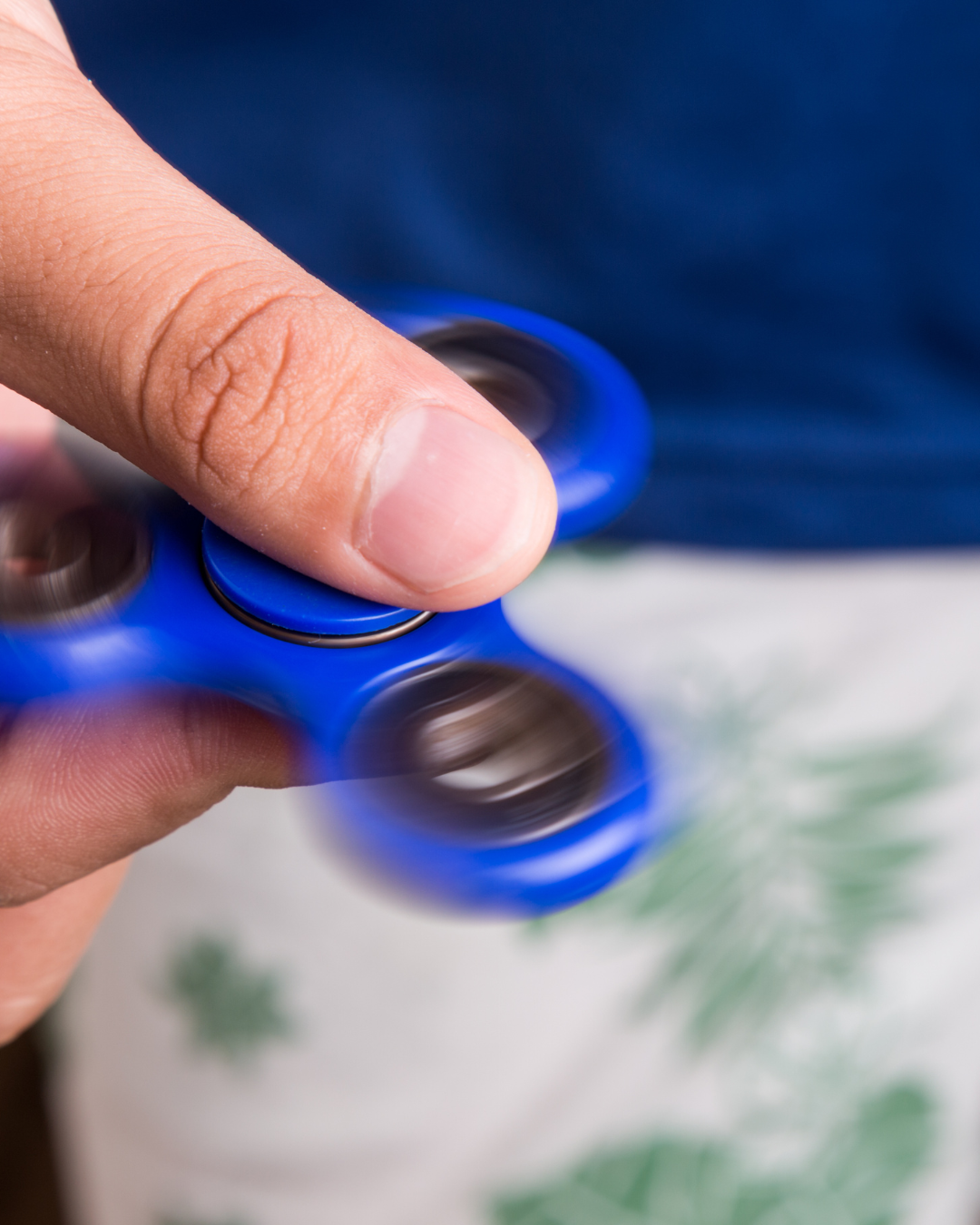
photo of: an autistic teen with a Fidget Spinner
One Thing to Try Tonight
Ask your teen:
“When does your body feel most restless—your hands, legs, or thoughts?”
Then match the spinner to the need, not the behavior.
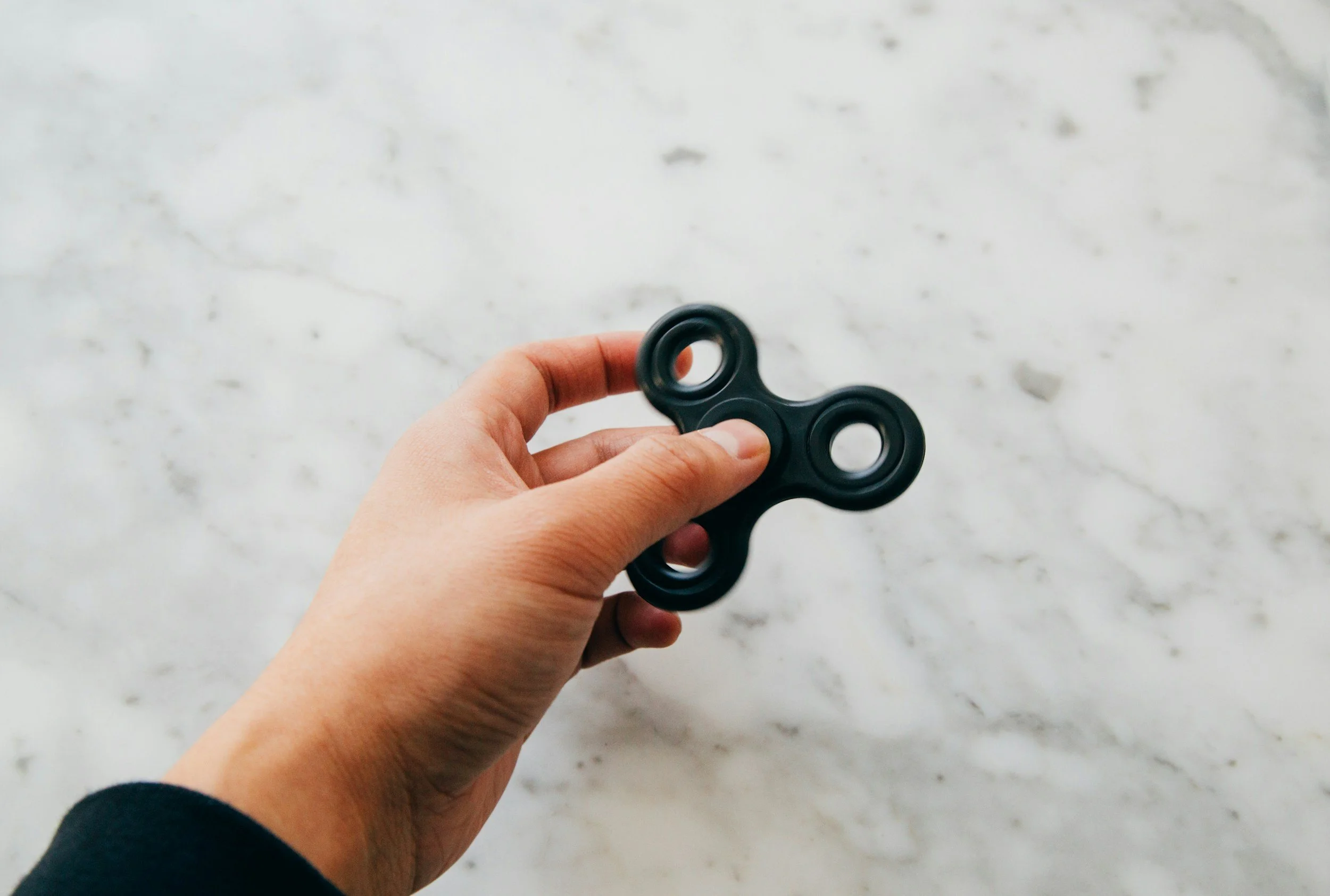
Photo of: Autistic teen holding a fidget spinner
Final Thoughts
Fidget spinners aren’t about compliance.
They’re about comfort, regulation, and dignity.
When autistic teens are given tools that respect their nervous systems, they don’t just cope—they thrive.
Understanding autism beyond the myths helps parents respond with confidence and compassion. When we shift from assumptions to understanding, we create safer, more supportive environments for autistic teens to thrive.
📖 Continue learning:
Read “What Is Masking? (Or Camouflaging in Autism)” to better understand how many autistic teens hide their struggles—and what that means for their mental and emotional well-being.
Infographic of: What is Masking in Autism teenagers.