
What Is Masking? (Autism Edition)
If your autistic teen comes home completely exhausted, melts down after holding it together all day, or seems like a “different person” at school than at home—you may be witnessing masking.
Masking is common, especially among autistic teens, and it often goes unnoticed by adults. Understanding what masking is (and what it costs) can completely change how we support our children.

photo of : a Group of autistic teens having fun
What Is Masking?
Masking is when an autistic person hides or suppresses their natural autistic traits to appear “neurotypical,” avoid judgment, or stay safe in social environments.
Many autistic teens mask without even realizing they’re doing it. Over time, it becomes automatic—something they do to survive school, social situations, or adult expectations.
Masking is not manipulation.
Masking is not being “fake.”
Masking is a coping strategy.
Save For Later!
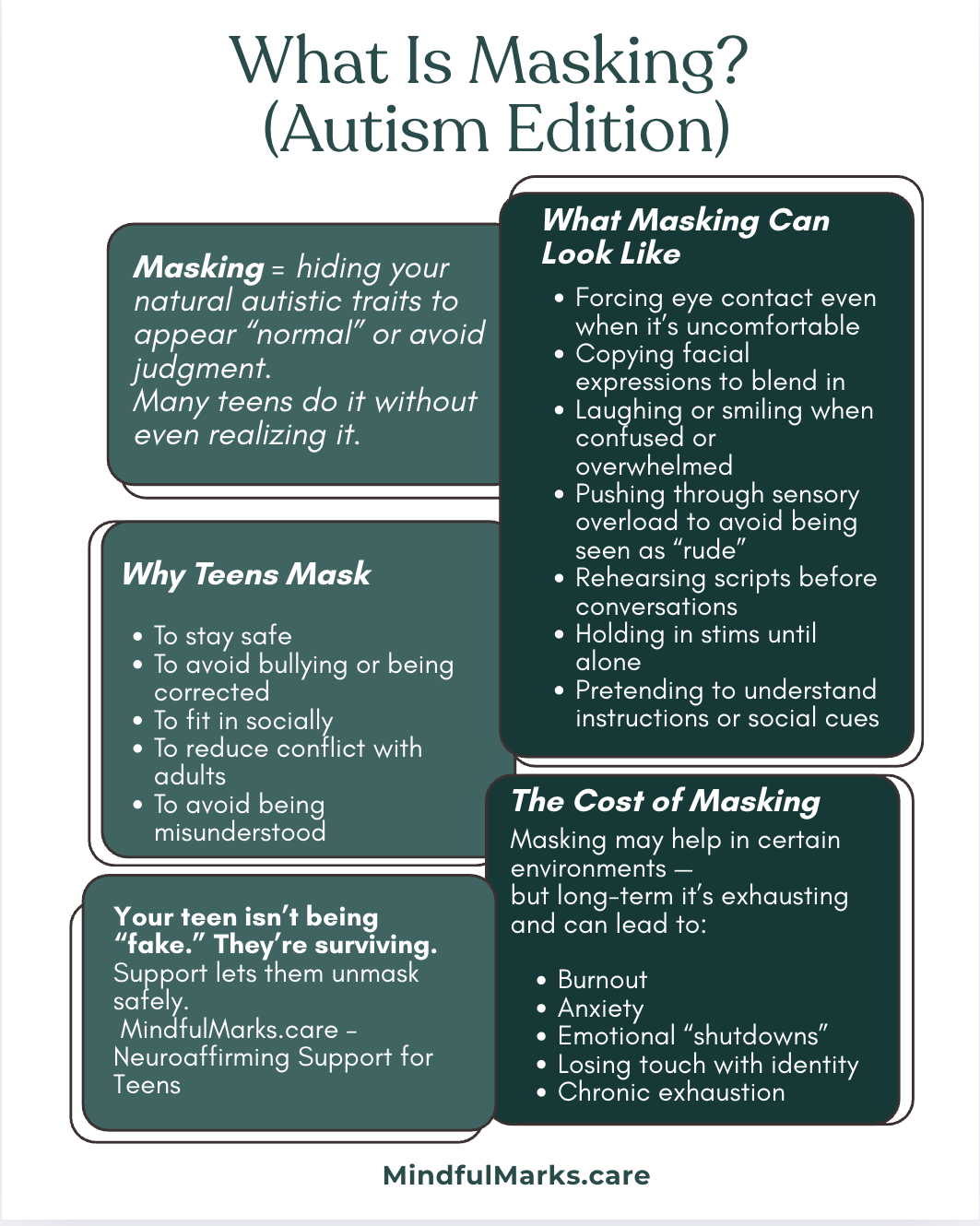
Infographic of: what masking is in teens with Autism.
What Masking Can Look Like in Teens
Masking doesn’t always look obvious. In fact, many masked teens are described as “high-functioning,” “polite,” or “doing fine”—even when they’re struggling deeply inside.
Masking may include:
Forcing eye contact even when it feels painful or overwhelming
Copying facial expressions or body language to blend in
Smiling or laughing when confused, anxious, or overstimulated
Pushing through sensory overload to avoid being seen as “rude.”
Rehearsing conversation scripts ahead of time
Holding in stims until they are alone
Pretending to understand instructions or social cues
To outsiders, your teen may look calm, capable, or well-adjusted. Internally, they may be working incredibly hard just to get through the day.
Why Autistic Teens Mask
Autistic teens don’t mask because they want to. They mask because they feel they have to.
Common reasons teens mask include:
To stay safe in environments where being different draws negative attention
To avoid bullying, teasing, or social rejection
To fit in socially with peers
To reduce conflict with adults
To avoid being misunderstood or corrected constantly
Many teens learn early that being their authentic self leads to consequences—so they adapt.
The Cost of Masking
While masking may help teens get through certain situations, long-term masking comes at a serious cost.
Over time, masking can lead to:
Autistic burnout
Chronic anxiety
Emotional shutdowns
Loss of identity or confusion about who they really are
Ongoing physical and emotional exhaustion
Some teens don’t fully crash until they get home. Others hold everything in until they can’t anymore. And many parents are left wondering, “Why does my child fall apart when the day is over?”
Masking is often the answer.
Why Masking Is So Often Missed
Masking can be especially overlooked because:
Teens may perform well academically
They may follow rules and appear compliant
They may not display “obvious” autistic traits in public
Adults may praise them for being “easy,” “mature,” or “quiet.”
Unfortunately, this often means their internal struggles are dismissed—or never seen at all.
Your Teen Isn’t Being “Fake.” They’re Surviving.
Masking is not deception.
It’s protection.
Your teen is doing the best they can with the tools they have in environments that may not be built for them.
What helps most isn’t forcing them to unmask everywhere—but creating spaces where they don’t have to mask at all.
How Parents Can Support Safe Unmasking
You don’t need to fix masking overnight. Small, consistent changes make a big difference.
Support can include:
Allowing your teen to stim freely at home
Letting them avoid eye contact without correction
Believing them when they say something is overwhelming
Offering recovery time after school or social events
Validating their experiences instead of minimizing them
When teens feel safe, unmasking happens naturally.

Photo of: A group of Autistic teens in a field holding up hearts.
Final Thoughts
Masking helps autistic teens survive—but support helps them thrive.
The goal isn’t to force authenticity in unsafe environments.
The goal is to build neuroaffirming spaces where your teen can rest, regulate, and be themselves without fear.
At MindfulMarks.care, we believe autistic teens deserve support that honors who they are—not who the world expects them to be.
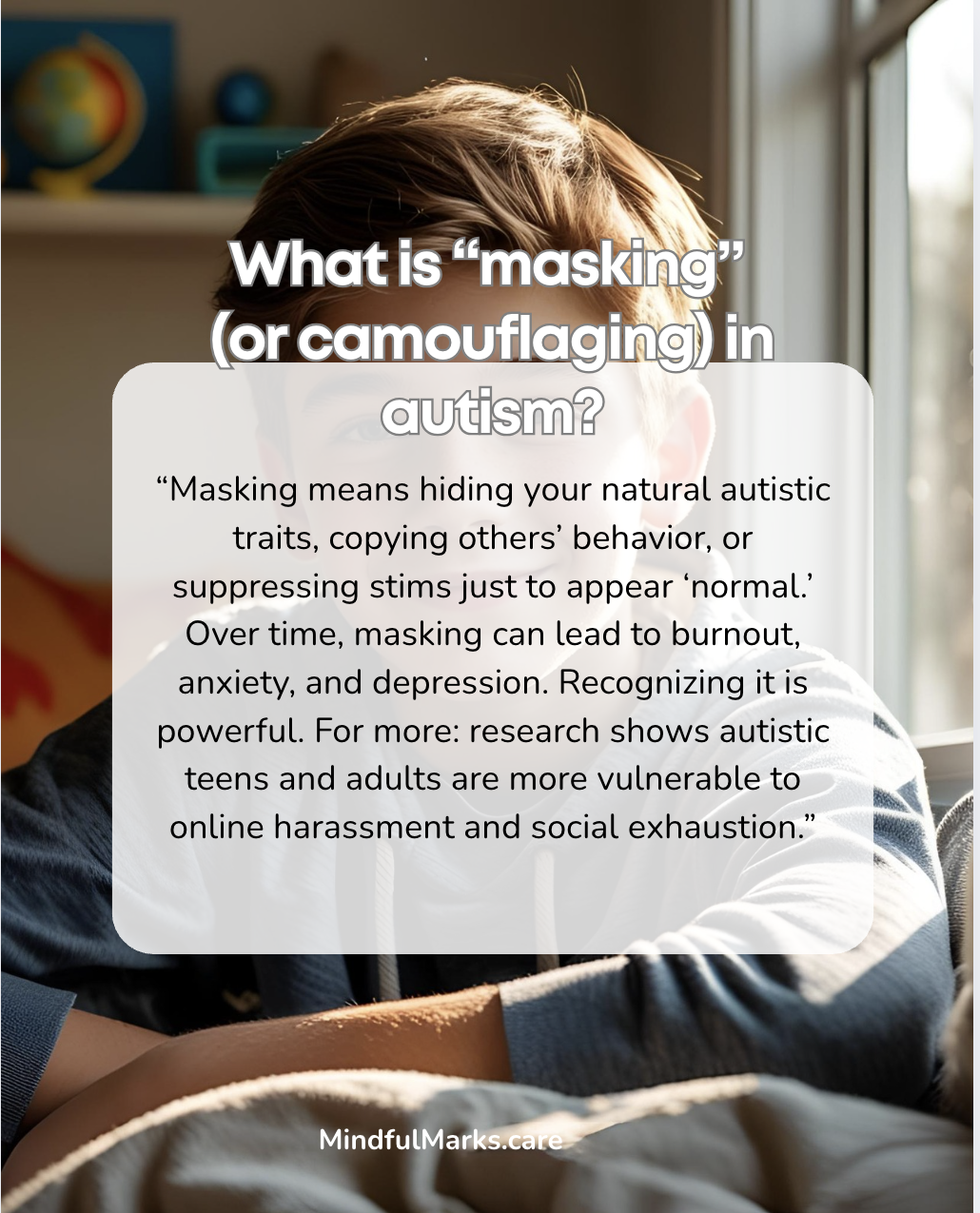
Infographic of: What’s Masking in autism.
Understanding autism beyond the myths helps parents respond with confidence and compassion. When we shift from assumptions to understanding, we create safer, more supportive environments for autistic teens to thrive.
📖 Continue learning:
Read “What is “Masking”(or Camouflaging) in Autism?)” to better understand how many autistic teens hide their struggles—and what that means for their mental and emotional well-being.
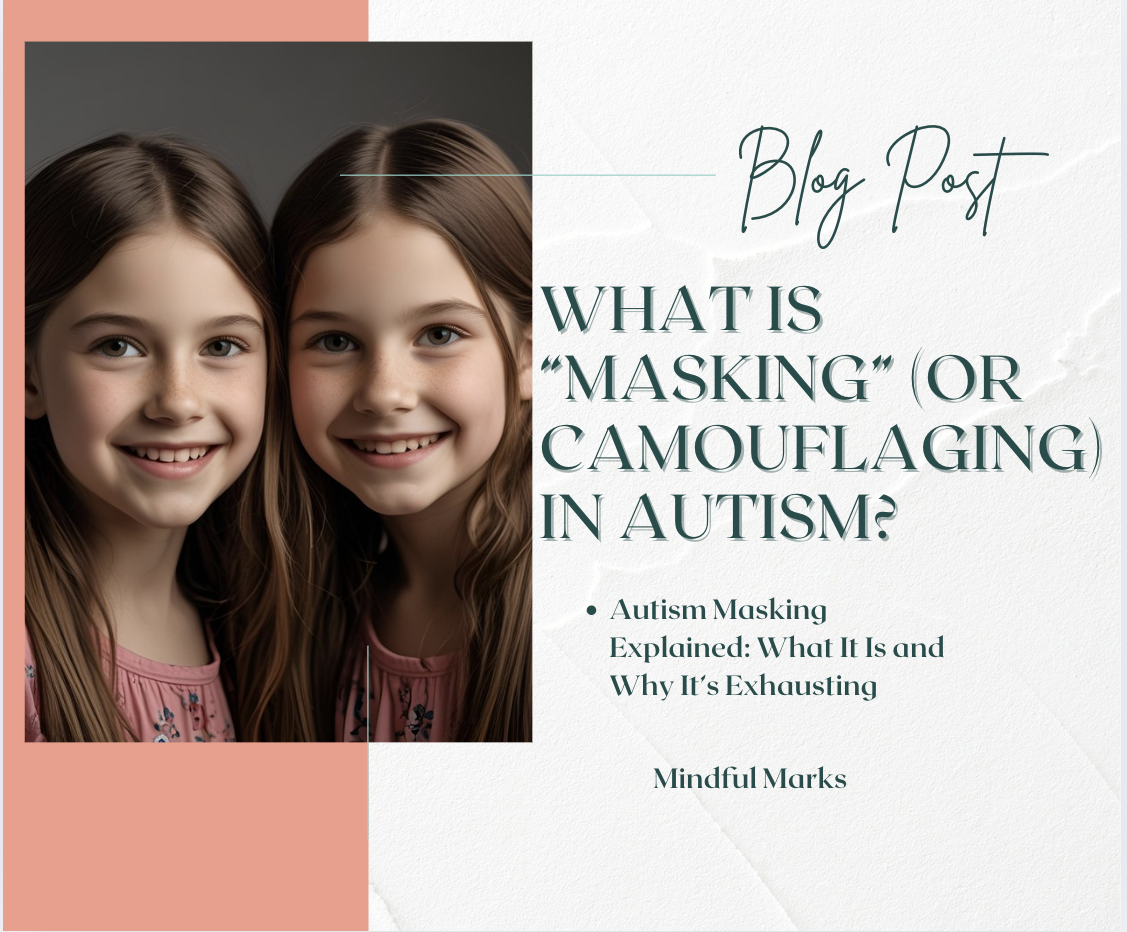
Infographic of: What is “Masking” (or Camouflaging) in Autism?