
What to Do when You Find Out your child has autism: A Guide for Parents
Discovering your child is Autistic: what Now?
Finding out your child has autism can feel like the ground beneath you has shifted. Whether you had a strong sense before the diagnosis or it came as a surprise, it's natural to feel a mix of emotions—relief, fear, sadness, confusion, even hope. All of these are valid.
Let us start by saying this: your child is the same beautiful, unique person they were before the diagnosis. What’s changed is your understanding—and with it, your ability to support them more effectively.
This post is here to help you process this new chapter and begin your journey with knowledge, compassion, and confidence.
let’s Start with the Basics:
Take a Breath
Before diving into therapies, appointments, or paperwork, take a moment. The diagnosis does not define your child. Autism is not something to "fix"—it’s a different way of experiencing and interacting with the world.
It’s okay to feel overwhelmed. You’re not alone.
Educate Yourself (But Don’t Overwhelm Yourself)
There is a flood of information out there—some accurate, some outdated, some harmful. Start small. Reliable resources include:
Trusted Websites:
Understood.org — Great for learning about neurodiversity
Wrightslaw — Advocacy and legal information for education rights
Pro Tip From Us: Bookmark or print a few guides that resonate. Don’t feel pressured to absorb everything at once.
Build Your Support Circle

You will need emotional and practical support. Seek out:
Local autism parent support groups (in-person or online)
Therapists for yourself or family counseling
Online communities like:
Facebook Groups for autism parenting
Subreddits like r/Autism_Parenting or r/Autism for self-advocate perspectives
Support networks help reduce isolation and provide real-world advice from those walking a similar path.
Begin the Services Process (Without Panic)
After diagnosis, early intervention and support are key—but every child’s timeline is different. Depending on your child’s age and needs:
For Toddlers & Young Children:
Early Intervention Services through your state’s IDEA Part C program
Speech, occupational, or behavioral therapy (with an emphasis on respectful, child-led care)
For School-Aged Children:
Request an IEP (Individualized Education Plan) through your local school district
Learn about your IDEA and Section 504 rights
For Teens:
Start thinking about transition planning, executive functioning support, and mental health care
Follow Autistic Voices
To raise an autistic child well, it’s important to learn from autistic adults. Their lived experience will help you avoid harmful practices and embrace neurodiversity.
Suggested Autistic Advocates & Educators:
Neurodivergent Rebel (@neurodivergentrebel)
The Autistic Advocate (Kieran Rose)
Dr. Devon Price (Author of Unmasking Autism)
AutisticSciencePerson on Instagram and TikTok

Create a Calming, Predictable Environment
Autistic children often thrive with routines and sensory-friendly spaces. Try the following at home:
Set up a Calm Corner with weighted items, sensory bins, noise-canceling headphones, and visuals
Use visual schedules or picture cards to help with transitions
Reduce overwhelming stimuli like loud music, strong lights, or chaotic environments
Pro Tip From Us : Involve your child in creating their sensory toolkit!
Mind Your Language & Mindset
Language matters. Many autistic people prefer identity-first language ("autistic person" rather than "person with autism"). But preferences vary—if your child is old enough, ask them what they prefer.
Avoid framing autism as a tragedy or something to battle. Focus on strengths, support, and connection.
Plan for the Future (Gently)
There may be concerns about finances, schooling, or adult life. Take things one step at a time, but be aware of:
SSI (Supplemental Security Income) for children with disabilities
ABLE Accounts (tax-advantaged savings accounts for disabled individuals)
Guardianship vs. Supported Decision-Making (especially as your child nears 18)
Life skills teaching and transition planning starting in the tween years
Advocate with Confidence
You are your child’s most powerful advocate. Learn your rights, ask questions, and don’t be afraid to say “no” to services or approaches that don’t feel right.
Advocacy doesn't mean doing it all alone. Seek help from:
Special education advocates
Disability rights organizations
Therapists who support family systems
Remember the Joy
Amid the checklists and challenges, remember to play, laugh, and enjoy your child. Autism is not a loss—it's a different way of being.
Let your child lead you into their world. You’ll be surprised by the beauty they show you.
Bonus Tools & Tips for the Journey
Create a binder or digital folder for all records, evaluations, and plans
Use apps like Cozi or TimeTree to manage appointments and routines
Start a journal to track behaviors, emotions, and sensory preferences
Download visual routine boards from sites like Teachers Pay Teachers or Twinkl
Color together using calming, sensory-friendly coloring books (like those from Mindful Marks)
Save This For Later!
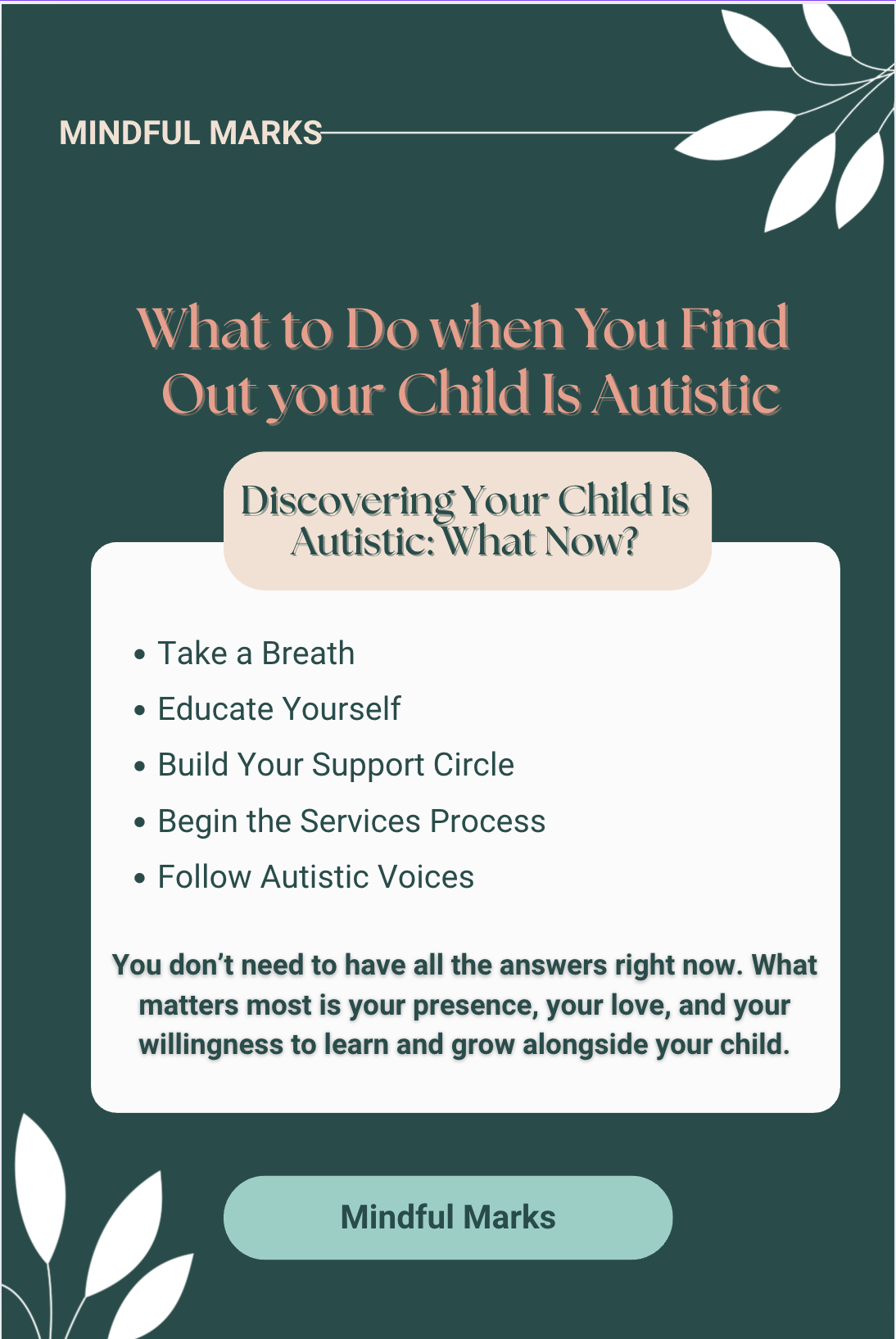
Infographic of: What to Do when You Find Out your child as autism
Final Thoughts From Us
You don’t need to have all the answers right now. What matters most is your presence, your love, and your willingness to learn and grow alongside your child.
You’ve got this. And we’re here with you every step of the way.
Join the Mindful Marks Newsletter
For weekly tips, sensory tools, affirmations, and encouragement straight to your inbox. You are not alone—welcome to a community that cares.

Photo of : Autistic Teenager with her Parent
Not sure where to go next?
If this topic sounds familiar, you may find support here: