

When Your Teen Falls Apart After School
Your teen holds it together all day—then unravels at home. If after-school meltdowns, shutdowns, or emotional crashes feel confusing or overwhelming, you’re not alone. This post explains why school drains autistic and neurodivergent teens and shares gentle, practical strategies to help them decompress, feel safe, and recover after long days.

What Does “Shutdown” Really Mean for Teenagers With Autism?
When an autistic teenager shuts down, it can look like silence, withdrawal, or emotional distance—but it’s not a choice. Shutdowns are a nervous-system response to overwhelming stress, sensory overload, or emotional exhaustion. In this guide, we explain what autistic shutdowns really mean, how they differ from meltdowns, and how parents can support their teens with calm, understanding, and care—without adding pressure or shame.

What Not to Say When Your Autistic Teen Is Being Bullied
When your autistic teen opens up about being bullied, your response can either build safety—or shut communication down. This guide explains what not to say, why those phrases are harmful, and how to support your teen with compassion and confidence.

I’m Terrified and Don’t Know If This Is Serious or Not
When your autistic teen says something alarming—or says nothing at all—it can leave you frozen with fear. Is this a passing thought, a shutdown, or something more serious? This compassionate guide helps parents understand the differences, recognize subtle warning signs, and respond without panic or dismissal.

Job Readiness: Helping Your Teen Build Work Skills
Starting a job is a major milestone—and for autistic teens, it can feel both exciting and overwhelming. Job readiness isn’t just about résumés or interviews. It’s about building real-world skills like communication, emotional regulation, routines, and self-advocacy in ways that respect neurodivergent needs. This guide helps parents support their teens with clarity, compassion, and confidence as they prepare for employment.
Why Planning Is Hard for Autistic Teens — And How to Help
Planning isn’t a motivation problem for autistic teens — it’s an executive function challenge. This post explains why planning can feel overwhelming, how autistic brains process tasks differently, and what actually helps teens build planning skills without shame or pressure. Learn supportive strategies that prioritize clarity, flexibility, and nervous system safety.
How to Help an Autistic Teen Express Romantic Feelings Safely
Learn how parents can help autistic teens express romantic feelings safely with clear communication, boundaries, scripts, and emotional support—without shame or fear.

Helping Autistic Teens Handle Rejection and Heartbreak
Rejection can feel devastating for autistic teens—often deeper and longer-lasting than adults expect. This guide explains why heartbreak hits so hard and offers compassionate, practical ways parents can support emotional healing without minimizing their teen’s experience.

Preparing Autistic Teens for Healthy Relationships
Healthy relationships don’t come naturally to every teen—and for autistic teens, they often need to be taught explicitly, gently, and without shame. This guide walks parents through how to support communication, boundaries, consent, and emotional safety so autistic teens can build relationships that feel respectful, empowering, and authentic.

Signs Your Autistic Teen Has a Crush (That Parents Often Miss)
Autistic teens experience crushes deeply—but they don’t always express them in obvious ways. From routine changes to emotional shutdowns, learn the subtle signs parents often miss and how to support your teen without pressure or shame.

Autistic Teens and Misreading Romantic Signals
Romantic signals are rarely clear—and for autistic teens, that ambiguity can lead to confusion, hurt feelings, and self-doubt. This guide explains why romantic cues are often misread and offers practical, compassionate ways parents can support their teen’s emotional well-being and relationship skills without pressure or control.
How to Explain Dating Rules to an Autistic Teen (Without Shame or Fear)
Dating rules can feel confusing—especially for autistic teens who don’t pick up on unspoken social expectations. This guide shows parents how to explain dating rules clearly, respectfully, and without fear, focusing on consent, boundaries, and emotional safety.
How to Support Autistic Teens Without Controlling Their Relationships.
Autistic teens need guidance in relationships—but not control. This supportive guide helps parents learn how to protect their teen’s emotional well-being while respecting autonomy, building trust, and encouraging healthy connections.
Why “Just Ignore the Crush” Doesn’t Work for Autistic Teens
When autistic teens develop a crush, being told to “just ignore it” can feel confusing, invalidating, and even painful. Romantic feelings aren’t a distraction to push away—they’re a real emotional experience. Understanding why ignoring doesn’t work is the first step toward helping teens navigate emotions with confidence and care.
How Autism Affects Romantic Feelings in Teenagers
Autistic teenagers experience crushes, attraction, and romantic curiosity just like their peers—but autism can influence how these feelings are processed, expressed, and understood. This guide explains what parents should know about romance, boundaries, and emotional safety for autistic teens.

When Your Autistic Teen Has Their First Crush: What Parents Need to Know
When your autistic teen develops their first crush, it can bring excitement, worry, and a lot of questions. This parent-friendly guide explains how autistic teens experience attraction, why emotions may feel more intense, and how to support your teen through crushes with empathy, clear communication, and emotional safety.
Is My Autistic Teen Being Rude—or Overwhelmed?
Is your autistic teen being rude—or are they overwhelmed?
Many parents find themselves confused by sudden snapping, blunt responses, or shutdowns that seem disrespectful on the surface. But for autistic teens, what looks like “attitude” is often a nervous system in distress. Sensory overload, emotional flooding, and communication breakdowns can make it hard for teens to respond calmly or politely in the moment.
This post explores how to tell the difference between rudeness and overwhelm, why traditional discipline often backfires, and what actually helps autistic teens feel safe, understood, and regulated. With practical, compassionate strategies, you’ll learn how to respond in ways that reduce escalation and build trust—without ignoring boundaries or expectations.
How to Communicate With an Autistic Teen Without Escalation
Communicating with an autistic teen can feel overwhelming—especially when conversations escalate quickly into meltdowns or shutdowns. But escalation isn’t defiance; it’s often a nervous system response to stress, sensory overload, or feeling misunderstood. In this post, we explore calm, practical communication strategies that help parents reduce conflict, support regulation, and build stronger, more trusting connections with their autistic teen.
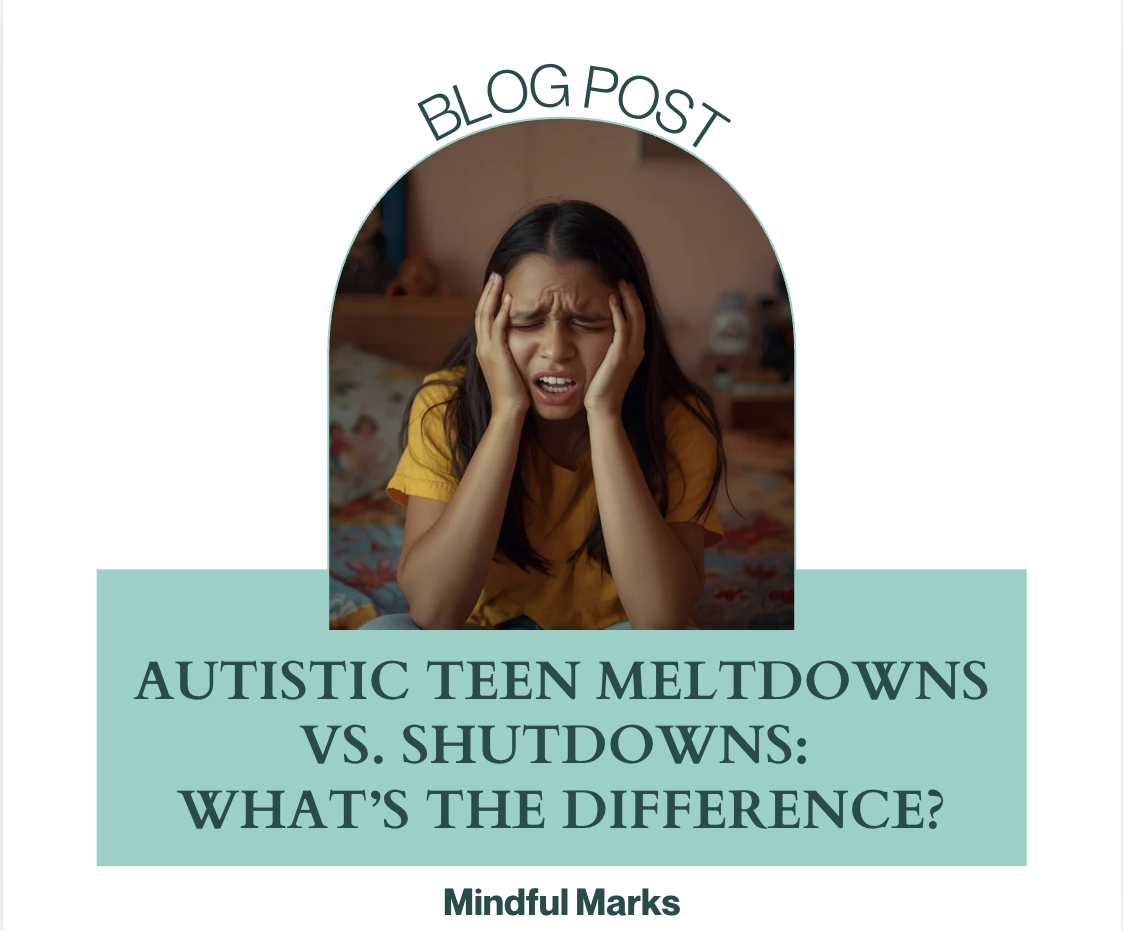
Autistic Teen Meltdowns vs. Shutdowns: What’s the Difference?
When an autistic teen suddenly explodes with emotion—or goes completely silent—it can leave parents feeling confused and unsure how to respond. These moments are often described as meltdowns or shutdowns, but they are not the same thing. Understanding the difference helps parents replace fear and frustration with compassion and support. In this post, we break down what meltdowns and shutdowns really are, why they happen, and how to respond in ways that help your teen feel safe, regulated, and understood.

5 Benefits of therapeutic Coloring for Autistic Teens
Therapeutic coloring offers more than just creative fun—it’s a proven way to support mental health and sensory needs in autism. Discover five key benefits, from reducing anxiety to boosting focus, that make mindful coloring a powerful tool for neurodivergent children, teens, and adults.